What Are the Top Types of Bone Surgery in 2026?
Bone surgery covers procedures that repair, reshape, replace, or remove bone. The right operation depends on the problem, its location, and a person’s overall health. In 2026, common categories include fracture fixation, joint replacement, spinal procedures, arthroscopy, osteotomy, and bone grafting. These are not interchangeable treatments. Each addresses different needs.
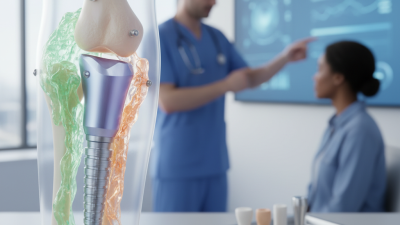
For a fracture, surgeons may use plates, screws, or rods to hold bone while it heals. Joint replacement removes damaged surfaces and fits artificial components, often in the hip or knee. Spinal surgery can stabilize vertebrae or relieve pressure on nerves. Arthroscopy uses a small camera and instruments to treat selected joint problems. Osteotomy changes a bone’s alignment; grafting may help fill a defect or support healing. The categories can overlap. A procedure that sounds routine may still involve meaningful risks, pain, and rehabilitation.
A clear plan matters. Before surgery, clinicians consider examination findings, imaging, medical history, and non-surgical options. They should explain expected benefits, possible complications, and recovery demands in language the patient understands. There is no single “top” operation for everyone. Even two people with similar scans may need different care. That nuance is easy to miss. This guide outlines major types of bone surgery, what they are intended to address, and questions patients can raise with a qualified orthopedic specialist.
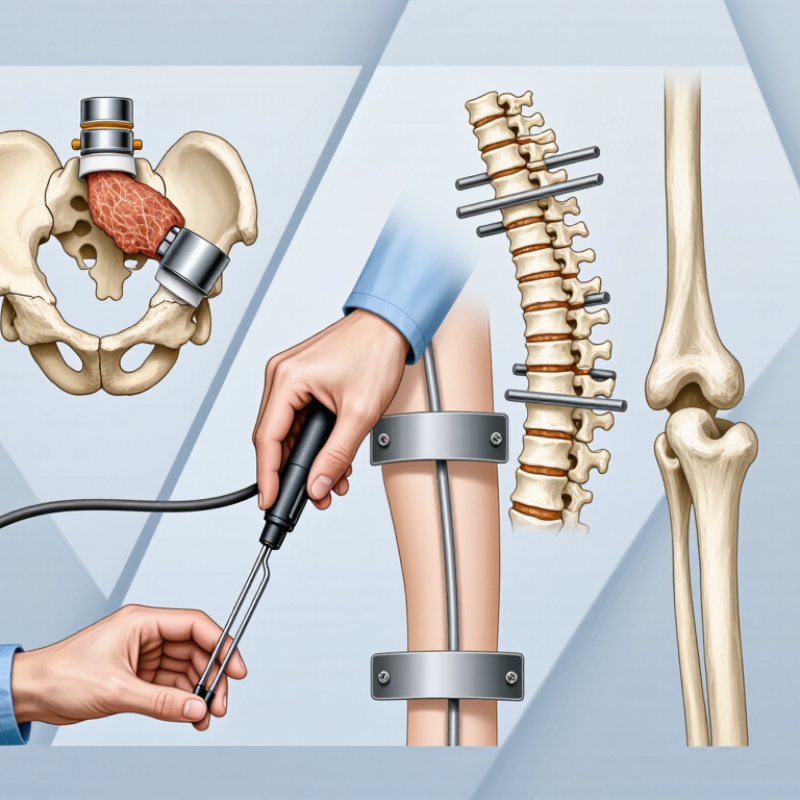
How Bone Surgeries Are Classified by Purpose
What Are the Top Types of Bone Surgery in 2026?
Bone surgeries are best understood by the problem they aim to address, not by a simple ranking. The goal differs. Repair surgery stabilizes a fracture with screws, plates, or a rod when a bone cannot heal reliably on its own. Reconstructive procedures may correct deformities or restore bone lost through injury. Some cases require graft material to support healing, though recovery varies.
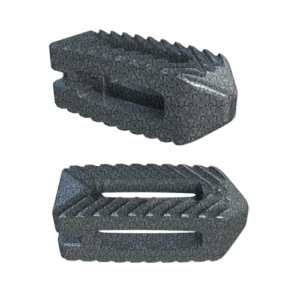
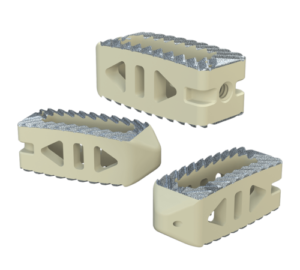
Joint replacement removes damaged bone and cartilage and fits an artificial joint, often to reduce pain and improve movement. Decompression surgery removes bone or tissue pressing on nearby nerves. Stabilization procedures, such as spinal fusion, join bones to limit painful movement. Surgeons may also remove bone affected by infection or a tumor, then plan reconstruction if needed. These categories can overlap. A fracture near a joint, for example, may need both fixation and reconstruction. Details matter.
Tips: Ask what purpose the proposed operation serves and what alternatives exist. Discuss expected recovery, risks, and how imaging supports the plan. A second opinion can help when the choice feels unclear. Even with careful planning, bone healing is not perfectly predictable.
Fracture Repair with Plates, Screws, Rods, or External Fixators
Fracture repair aims to hold broken bone ends steady while healing begins. The method depends on the break’s location, shape, and stability. A surgeon also considers swelling, skin damage, and a person’s overall health. There is no single best device for every fracture. It varies.
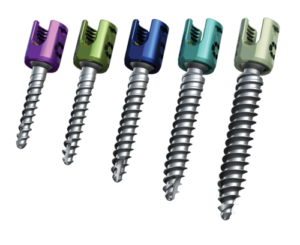
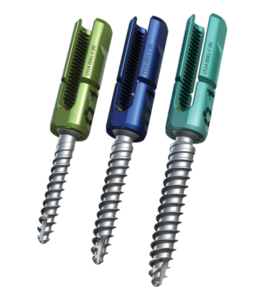
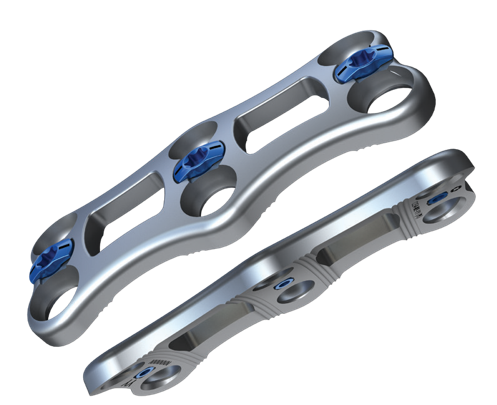
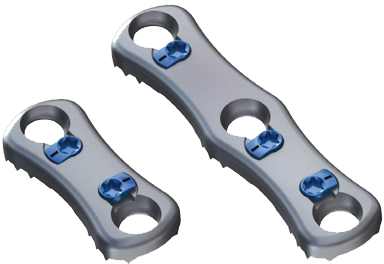
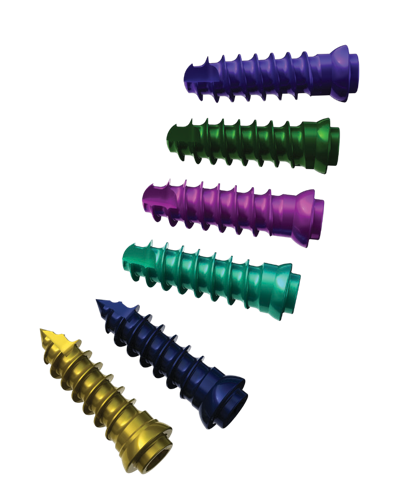
Plates sit against the bone and are secured with screws. They can help align fractures near joints or in bones with complex shapes. Screws may also hold selected breaks directly, while long metal rods can sit inside the central canal of a thigh or shin bone. External fixators use pins placed through the skin and connect them to an outside frame. That frame can be useful when wounds or swelling make internal hardware less suitable. Not always.
Each option has trade-offs. Internal fixation can provide stable alignment, but infection, stiffness, delayed healing, or hardware irritation may occur. External frames need careful pin-site cleaning and regular clinical checks. Healing takes time. Follow-up imaging helps clinicians assess alignment and bone growth; activity and weight-bearing advice should come from the treating team. The choice can look clear on an X-ray, yet soft-tissue condition may change the plan. That uncertainty deserves an honest conversation.
What Are the Top Types of Bone Surgery in 2026? — Fracture Repair with Plates, Screws, Rods, or External Fixators
| Fixation method |
How it works |
Common uses |
Potential advantages |
Important considerations |
| Plates and screws |
A surgeon positions a metal plate along the bone and secures it with screws to hold fracture fragments in alignment. |
Many fractures near joints, fractures with multiple fragments, and fractures where accurate alignment is important; examples include some wrist, ankle, and upper-arm fractures. |
Provides direct, stable fixation and can help restore alignment, including near a joint. |
Usually requires an incision to reach the bone. Suitability depends on fracture pattern, soft-tissue condition, and bone quality; hardware may remain in place or sometimes be removed later. |
| Intramedullary rods or nails |
A rod or nail is inserted into the central canal of a long bone, commonly with locking screws at one or both ends. |
Many shaft fractures of long bones, especially the femur and tibia; selected humeral shaft fractures may also be treated this way. |
The implant lies within the bone and can provide strong support along its length, often through relatively small incisions. |
Not appropriate for every fracture location or pattern. The operation may involve specific risks, such as irritation near the entry site, and weight-bearing guidance depends on the injury and fixation. |
| External fixation |
Pins or wires are placed into bone through the skin and connected to an external frame that stabilizes the fracture. |
Open fractures, severe soft-tissue injury, some complex fractures, or situations where temporary stabilization is needed before another procedure. |
Can stabilize a bone while leaving access to injured skin and soft tissue; some frames can be adjusted after placement. |
Requires care of pin sites and monitoring for infection, loosening, or discomfort. The frame is visible outside the body and may be temporary or, in selected cases, definitive treatment. |
| Percutaneous screws or pins |
Screws or pins are inserted through small skin incisions, often with imaging guidance, to hold selected fracture fragments in position. |
Selected fractures with fragments that can be aligned without a large open incision, including some fractures near joints or in the pelvis. |
Can limit the size of the incision and disruption of surrounding soft tissue when the fracture pattern is suitable. |
Requires a fracture pattern that can be reduced and held reliably. Imaging, precise placement, and sometimes additional fixation are needed. |
| Wires or pins with a cast or splint |
Thin wires or pins hold small or relatively simple bone fragments; a cast or splint may provide additional support while healing occurs. |
Selected fractures in children and certain small-bone or joint-area fractures, depending on stability and alignment. |
Can be effective for appropriately selected fractures and may use smaller incisions than some plate procedures. |
Pins may need removal after healing. Cast care and follow-up imaging are important, and the method is not suitable for every unstable or displaced fracture. |
The appropriate procedure depends on the fracture’s location and pattern, displacement, soft-tissue condition, overall health, and healing factors. Treatment plans and recovery vary; an orthopedic specialist can explain the options for an individual injury.
Joint Replacement and Corrective Osteotomy
What Are the Top Types of Bone Surgery in 2026?
Joint Replacement and Corrective Osteotomy
Joint replacement and corrective osteotomy address different problems. Replacement removes damaged joint surfaces and uses implants to restore function, often for advanced arthritis. Osteotomy reshapes or repositions bone to improve alignment and shift pressure away from an overloaded part of a joint. Think of a knee whose worn inner side bears too much load: an osteotomy may redirect that force, while replacement may be considered when damage is more extensive.
Neither operation suits everyone.
The 2024 American Joint Replacement Registry Annual Report documents more than 3.7 million hip and knee procedures recorded since the registry began. This is a large US dataset, not a worldwide count.
The OECD’s Health at a Glance 2023 reports average 2021 rates of 174 hip replacements and 137 knee replacements per 100,000 people across member countries. Rates vary by country, and they do not show which procedure is best for an individual.
Osteotomy can preserve a natural joint, but recovery and weight-bearing restrictions may be demanding. It is not a perfect fix. Age, bone quality, alignment, symptoms, and activity goals all matter; imaging and a specialist’s assessment help guide the choice. Regretfully, patient goals do not always match what a scan suggests.
Bone Grafting and Reconstructive Surgery
Bone grafting helps rebuild bone when a fracture leaves a gap, healing stalls, or a surgeon must support a fusion. Reconstructive surgery may combine graft material with plates, screws, or carefully shaped bone to restore strength and alignment. The graft may come from the patient, a donor, or a synthetic material; the right choice depends on the defect, health, and treatment goals. Small details matter. A poorly supported graft may not unite as hoped.
The Global Burden of Disease 2019 study, published in The Lancet Healthy Longevity, estimated 178 million new fractures worldwide that year. That figure is not a count of graft operations, but it shows the scale of injuries that can require complex repair. Surgeons assess imaging, bone quality, infection risk, and blood supply before planning reconstruction. Recovery varies, and the plan may change when healing is slower than expected. Evidence does not make every outcome predictable.
Tips: Ask what material is planned, how success will be monitored, and which activities to avoid during healing. Keep follow-up appointments, even when the incision looks fine. A graft is not a quick patch; rebuilding takes time.
Top Bone Graft Types in 2026: Key Biological Characteristics
A comparison of common graft categories used in bone grafting and reconstructive surgery.
Values indicate whether a characteristic is typically present (1) or not typically present (0); they do not represent success rates or how often each graft is used. Autografts come from the patient and typically contain viable bone-forming cells. Allografts, xenografts, and synthetic grafts generally provide a scaffold that supports new bone growth. Processing and product composition can vary.
Spinal and Bone Tumor Surgery
In 2026, spinal and bone tumor surgery covers several procedures, not one standard operation. Surgeons may remove a bone tumor with a margin of healthy tissue, then reconstruct the affected area. For spinal tumors, surgery may relieve pressure on the spinal cord, stabilize weakened vertebrae, or obtain tissue for diagnosis. The right goal depends on tumor type, location, spread, and the patient’s overall health.
The American Cancer Society’s 2025 Cancer Facts & Figures estimated 3,770 new primary bone and joint cancer cases in the United States. That figure excludes the far more common situation of cancer spreading to bone from another organ. The National Cancer Institute’s SEER Cancer Stat Facts reports a five-year relative survival rate of about 68% for bone and joint cancer, across stages and tumor types. These numbers describe populations, not an individual outlook.
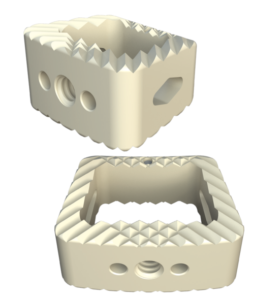
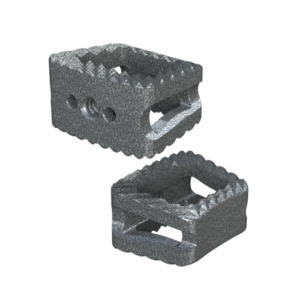
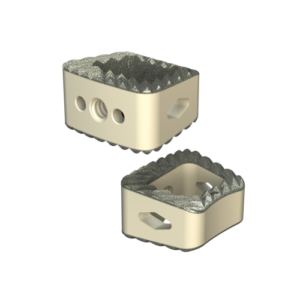
For a spinal tumor, a team may combine imaging, biopsy, and neurological assessment before discussing surgery. Some patients need decompression and metal fixation; others are better treated without an operation. Recovery can involve pain, limited movement, and rehabilitation. The difficult part is balancing tumor control with preserving function. Data can guide that conversation, but they cannot decide it.






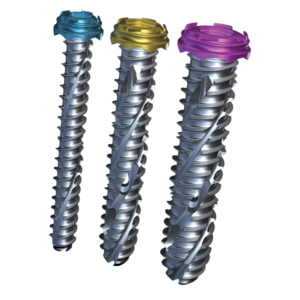

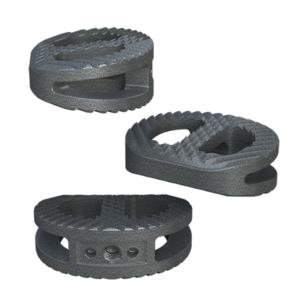 System Features
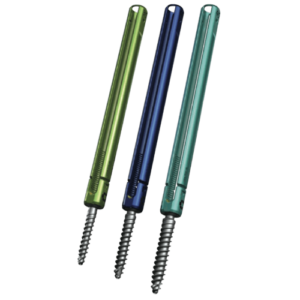 Key Features
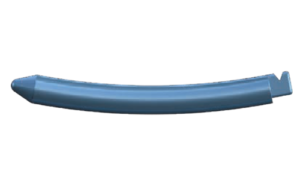 Key Features
 Key Features
 Key Features
 Key Features
 Key Features
 Key Features
 Key Features
 Key Features