| Lumbar disc herniation with radiculopathy |
Discectomy or microdiscectomy |
Surgical intervention is appropriate for patients whose symptoms are severe enough to warrant surgery or who have persistent symptoms despite a trial of medical or interventional treatment. Discectomy generally provides faster relief than continued nonoperative care in appropriately selected patients. |
Fusion is not routinely indicated for an isolated disc herniation. It may be evaluated when there is documented instability, significant axial back pain associated with disc degeneration, deformity, or recurrent herniation requiring extensive facet removal. |
Relieve nerve-root compression and improve leg pain, function, and mobility. |
Neurological improvement, leg-pain reduction, reoperation rate, length of stay, rehabilitation needs, and availability of MRI and intraoperative imaging. |
NASS, Diagnosis and Treatment of Lumbar Disc Herniation with Radiculopathy. |
| Degenerative lumbar spinal stenosis without instability |
Lumbar decompression, such as laminectomy or targeted laminotomy |
Decompression is recommended for patients with symptomatic lumbar spinal stenosis who have failed an appropriate course of nonoperative treatment or have clinically significant functional limitation. The procedure should be tailored to the level and anatomical source of compression. |
Fusion should not be added routinely when there is no demonstrated instability, deformity, or other structural indication requiring stabilization. |
Improve neurogenic claudication, leg symptoms, walking tolerance, and daily function. |
Walking-distance improvement, leg-pain relief, preservation of spinal stability, blood loss, hospital stay, and postoperative mobilization. |
NASS, Diagnosis and Treatment of Degenerative Lumbar Spinal Stenosis. |
| Degenerative lumbar spondylolisthesis with stenosis |
Decompression alone or decompression with instrumented fusion, based on patient and radiographic factors |
NASS guidance supports decompression with fusion for selected symptomatic patients, particularly when stenosis is associated with instability, deformity, or foraminal compromise. Decompression alone may be reasonable in selected patients with low-grade, stable disease and predominantly leg symptoms. |
Consider radiographic motion, mechanical back pain, sagittal or coronal deformity, foraminal stenosis, facet removal required for adequate decompression, and the risk of postoperative instability. |
Decompress neural structures while maintaining or restoring spinal alignment and stability. |
Slip grade, dynamic instability, alignment parameters, fusion rate, adjacent-segment concerns, neurological outcomes, and revision surgery. |
NASS, Diagnosis and Treatment of Degenerative Lumbar Spondylolisthesis. |
| Isthmic spondylolisthesis |
Decompression with lumbar fusion when surgery is indicated |
Fusion is commonly considered when symptomatic isthmic spondylolisthesis persists despite nonoperative care, especially when mechanical back pain, foraminal stenosis, or instability is present. Decompression may be required for associated nerve-root compression. |
Fusion is more strongly considered because direct pars defects and foraminal narrowing may compromise stability, particularly when decompression removes stabilizing structures. |
Stabilize the affected segment, decompress nerve roots, and reduce pain-related functional limitation. |
Slip grade, sagittal alignment, fusion assessment, implant positioning, neurological recovery, and return-to-activity pathway. |
NASS, Evidence-Based Clinical Guidelines for Multidisciplinary Spine Care: Adult Isthmic Spondylolisthesis. |
| Degenerative disc disease with mechanical low-back pain |
Lumbar fusion in carefully selected patients |
Fusion should be reserved for appropriately selected patients after confirmation of the pain generator and failure of nonoperative management. Imaging abnormalities alone are insufficient to establish a surgical indication. |
Fusion may be considered when disabling mechanical pain is concordant with clinical and imaging findings and alternatives have been evaluated. |
Reduce disabling axial pain and improve function while achieving solid arthrodesis. |
Patient-selection accuracy, patient-reported outcomes, fusion assessment, opioid reduction, return to work, and revision risk. |
NASS evidence-based guidance on lumbar fusion and degenerative lumbar conditions. |
| Adult spinal deformity or degenerative scoliosis |
Decompression with instrumented fusion and deformity correction when indicated |
Treatment planning should integrate symptoms, neurological compression, coronal and sagittal alignment, frailty, bone quality, and the anticipated extent of correction. Decompression without stabilization may be unsuitable when it worsens deformity or instability. |
Fusion is considered when deformity, instability, significant foraminal stenosis, or the required decompression would compromise spinal support. |
Improve balance, relieve neural compression, reduce disability, and maintain alignment. |
Sagittal vertical alignment, pelvic parameters, complication profile, blood loss, bone-health optimization, rehabilitation capacity, and reoperation rate. |
NASS multidisciplinary spine-care guidance and contemporary adult spinal deformity evidence. |
| Thoracic or cervical spinal cord compression |
Region-specific decompression, with or without fusion |
Decompression is generally prioritized when there is progressive neurological deficit or clinically significant spinal cord compression. The surgical approach depends on the level, alignment, number of affected segments, and underlying pathology. |
Fusion may be added when instability, deformity, significant facetectomy, or an approach-related loss of structural support is expected. |
Protect or improve neurological function and maintain spinal stability. |
Neurological examination, alignment, implant and imaging capability, operating-room monitoring, intensive-care access, and rehabilitation services. |
Condition-specific NASS and multidisciplinary spine-surgery guidelines. |








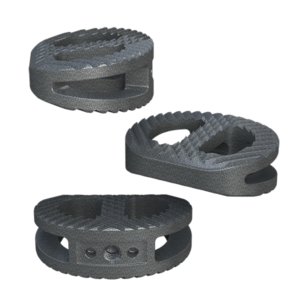 System Features
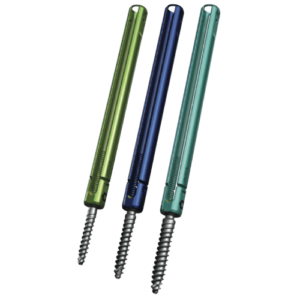 Key Features
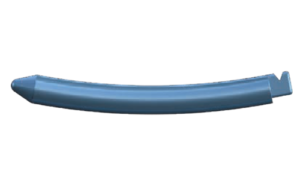 Key Features
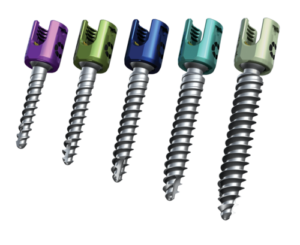 Key Features
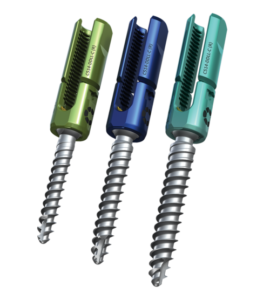 Key Features
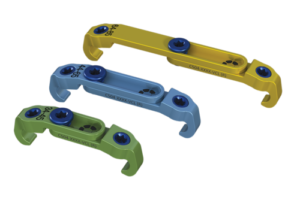 Key Features
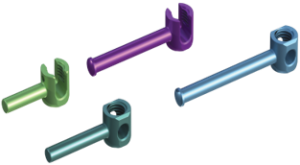 Key Features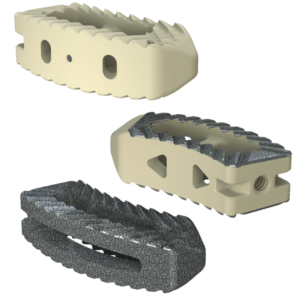
 Key Features
 Key Features
 Key Features