Who Are the Top Interbody Fusion Cage Suppliers in China?

China’s interbody fusion cage market includes manufacturers with different materials, designs, production capabilities, and export experience. A useful supplier review should look beyond polished product photos. It should examine implant materials, available sizes, quality documentation, and the evidence supporting each product’s intended use. Details matter. A titanium cage and a polymer cage may differ in imaging visibility, surface design, and handling during surgery.

Spine surgeon and researcher Dr. Thomas Zdeblick has contributed to the development and study of spinal fusion devices. The following is an editorial summary of a broad clinical principle, not a verbatim quotation: “A cage is a device within a treatment plan, not a substitute for sound clinical judgment.” That distinction matters when comparing suppliers. Product claims deserve careful review, and a supplier’s technical information should be checked against independent evidence where available.

This guide introduces leading Chinese suppliers and the factors that can help readers assess them: product range, manufacturing transparency, design features, and publicly available quality information. Supplier rankings can appear definitive, but comparisons are only as reliable as their evidence. Some details may be difficult to verify from public materials alone. That limitation deserves attention, not glossing over. A clear comparison can help hospitals, distributors, and researchers ask better questions about interbody fusion products without treating a catalogue listing as proof of clinical performance.

Who Are the Top Interbody Fusion Cage Suppliers in China?

What Interbody Fusion Cages Are and How They Support Spinal Fusion

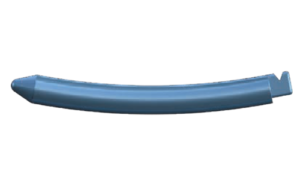
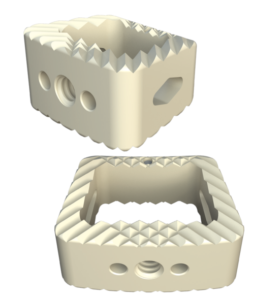
An interbody fusion cage is a small spacer placed between two vertebrae after a damaged disc is removed. It helps preserve disc height and creates room for bone graft material. Over time, new bone may grow through or around the cage, joining the vertebrae. The cage supports the space; it does not fuse the spine by itself. Not a cure.

The World Health Organization’s 2023 low-back-pain fact sheet estimated that 619 million people experienced low back pain in 2020, with projections reaching 843 million by 2050. These figures describe a broad health burden, not the number of people who need fusion surgery.

Surgeons consider symptoms, imaging, spinal stability, and prior treatment before recommending it. Cage materials and shapes vary, and placement depends on the patient’s anatomy and the surgical approach. A well-positioned cage can support alignment, but bone healing also depends on graft choice and individual biology. Complications such as cage subsidence or failure of fusion remain possible. That deserves honest discussion. A cage may look like a simple implant on an X-ray; the decisions behind it are not.

Materials and Designs Used in China’s Interbody Fusion Cages

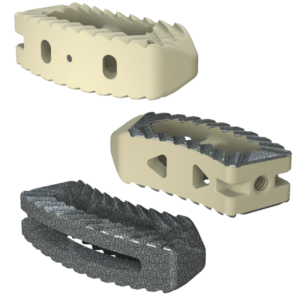
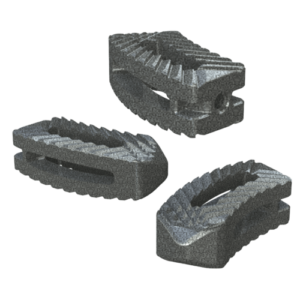
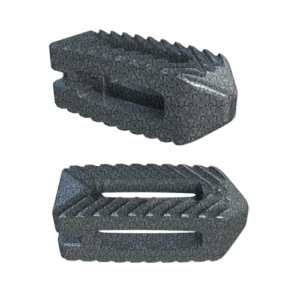
China’s interbody fusion cages commonly use PEEK, titanium alloys, or combinations of both. ASM International materials data place unfilled PEEK’s elastic modulus near 3.6 GPa, compared with roughly 110 GPa for Ti-6Al-4V. PEEK is therefore closer to bone in stiffness, while titanium offers a rigid structure and clear visibility of bone growth on scans. The trade-off is real. A material’s lab performance alone cannot predict a patient’s fusion result.

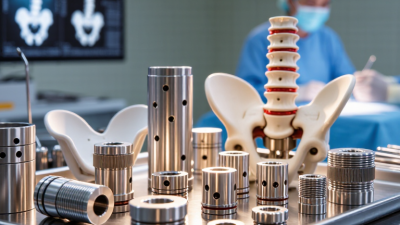
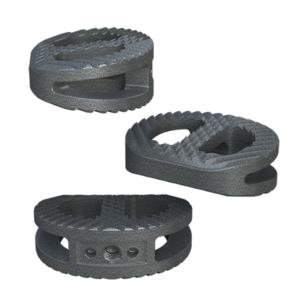
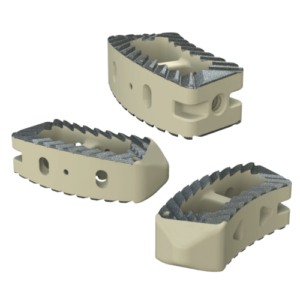
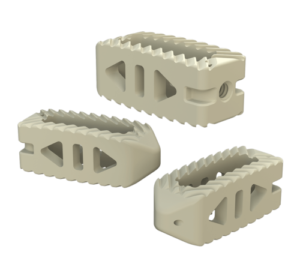
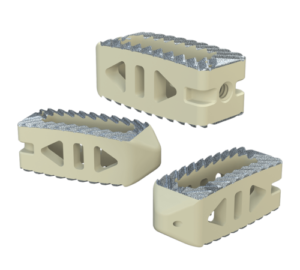
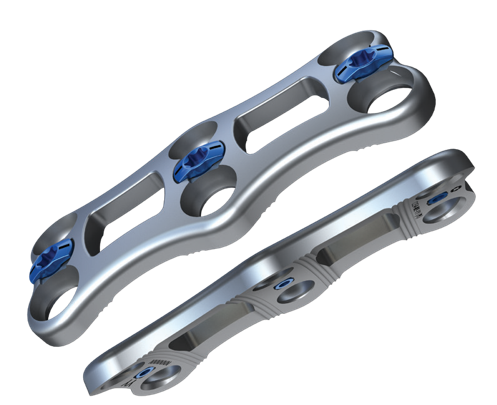
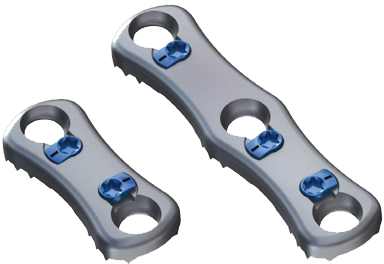
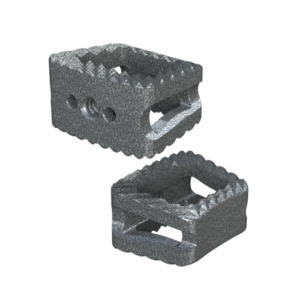
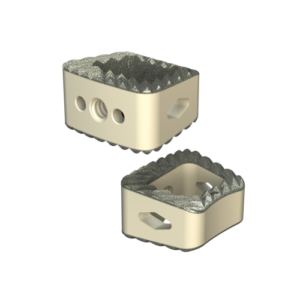
Design shapes how these materials meet the vertebral endplates. Smooth PEEK cages may use teeth or ridges for grip; porous titanium surfaces provide spaces where bone can grow into the implant. Some designs combine a PEEK body with a porous metal surface. Others use open lattices, broad footprints, and angled profiles to support the spine’s alignment. Small details matter: a narrow contact area can concentrate load, while an oversized cage may damage the endplate. ASTM F2077 evaluates interbody devices through mechanical tests, including compression and compression-shear. These tests help compare structural performance, but they do not settle clinical questions. Engineers still face a difficult balance between porosity, strength, imaging clarity, and reliable fit. There is no perfect cage.

Major Interbody Fusion Cage Suppliers in China

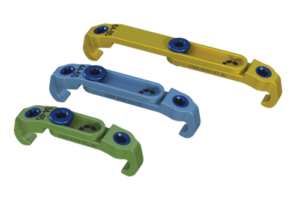
China’s major interbody fusion cage suppliers include specialist medical-device manufacturers and broader orthopedic implant producers. Their portfolios may cover titanium, polymer, and porous-metal cages in different shapes and sizes. Some suppliers focus on domestic hospitals; others support international distribution or contract manufacturing. The market is not a simple leaderboard. Product range and export experience vary.

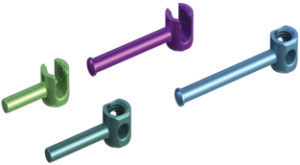
For buyers, useful questions go beyond price. Ask how the supplier controls dimensions, surface finish, and material traceability. Review technical files, quality-system documentation, sterilization records, and change-control procedures. Request clear drawings and samples, then compare features such as graft windows, teeth, and inserter compatibility. Small details matter. A cage that looks suitable in a catalogue may not fit a surgeon’s workflow or the intended procedure. Supplier claims should be checked against current documents and independent technical review. This takes time. It can also reveal gaps that a polished sales presentation misses. Reliable sourcing depends on evidence, not just a long product list.

How to Compare Chinese Suppliers by Quality, Certification, and Product Range

A meaningful comparison starts with the quality system, not a polished catalog. Ask for current certificates and check that their scope covers the manufacturing site and relevant devices. A certificate alone is not proof of consistent production. Review audit findings, batch traceability, material records, and documented inspection steps. Request mechanical test reports for the specific cage models under consideration. Check test methods, sample sizes, and dates.

Details matter. Compare dimensions, footprints, heights, and lordosis options against the intended procedures. Ask how surface features and materials are controlled between production lots. Review packaging and sterilization documentation, where applicable, and confirm that supplied records match the product. Small differences can affect handling. Supplier responses should be specific, not just reassuring.

Product range is useful when it offers practical choices without making selection confusing. Compare available approaches, sizes, and compatible instruments, then check whether technical files and test evidence cover each variation. A broad range is not automatically a strength. One weak point in supplier comparisons is relying too heavily on sample parts; samples may not represent routine production. Request clarification when documents are incomplete, and record unresolved questions before making a purchasing decision.

Regulatory and Market Factors Affecting Supplier Selection

Regulatory and market factors should shape how buyers assess interbody fusion cage suppliers in China. A catalogue is only a starting point. Check that product registration and documentation match the specific device and intended use. Requirements can differ across markets, so confirm them with qualified regulatory specialists before procurement. Ask for current quality-system records, material specifications, sterilization information, and batch traceability. Details matter. Clear responses are useful evidence of a supplier’s process, though documents alone cannot prove consistent production quality.

Market considerations matter just as much. Review manufacturing capacity, delivery history, complaint handling, and the supplier’s ability to maintain consistent dimensions across batches. Request technical data relevant to the intended application, and examine how changes to materials or processes are controlled. Compare total costs, including evaluation, logistics, and ongoing support, rather than focusing only on unit price. A spreadsheet cannot capture every issue. Communication may be slower than expected, or a sample may not represent routine production. Independent verification and carefully documented audits can reduce these uncertainties without removing them entirely.