10 Best Surgical Products Suppliers for Global Buyers

Choosing reliable surgical products suppliers requires more than comparing prices or browsing polished websites. Global buyers must examine product quality, regulatory documentation, manufacturing experience, and after-sales support. A dependable supplier should provide clear specifications, traceable batch records, certificates from recognized authorities, and responsive communication across time zones. Small details matter. Packaging should protect sterile items from moisture, crushing, and temperature changes during transit.

This guide introduces 10 surgical products suppliers serving international markets and evaluates them through practical purchasing criteria. These include product range, quality-control procedures, production capacity, delivery performance, customization options, and compliance with destination-country requirements. Supplier reputation also matters, but reputation alone is not proof. Buyers should request samples, verify certificates independently, and review inspection policies before placing substantial orders. A factory tour, when practical, can reveal more than a sales presentation.

The list is designed for hospitals, distributors, medical procurement teams, and professional resellers. It does not treat every supplier as suitable for every buyer. One company may excel in disposable instruments, while another may offer stronger support for operating-room equipment or private-label programs. That distinction is easy to miss. Pricing can also change with order volume, shipping routes, material costs, and currency movements. Buyers should confirm current information directly with each supplier. This article aims to support careful decisions, not replace clinical judgment, regulatory review, or qualified procurement advice. Mistakes remain possible, especially when documentation differs between markets.

10 Best Surgical Products Suppliers for Global Buyers

Global Surgical Demand: 312.9 Million Operations Performed Annually

10 Best Surgical Products Suppliers for Global Buyers

Global Surgical Demand: 312.9 Million Operations Performed Annually

An estimated 312.9 million operations are performed worldwide each year. This figure shows why dependable surgical product sourcing matters. Hospitals need more than low prices. They need consistent quality, clear documentation, and reliable delivery schedules.

Strong suppliers provide sterile instruments, surgical drapes, wound-care products, and procedure-specific kits. Their quality systems should support lot tracking, inspection records, and controlled packaging. Buyers should review product specifications carefully. Small differences in material, size, or coating can affect handling during surgery. Sample evaluation is essential.

Details matter.

Experienced procurement teams also examine production capacity and shipment resilience. A supplier may offer excellent products but struggle during demand spikes. Ask about backup production, export documentation, storage conditions, and communication procedures. Independent quality audits can reveal gaps that brochures often hide. Local service support may also reduce delays when hospitals need replacement items quickly.

The 312.9 million figure is useful, but it does not show every market equally. Surgical demand varies by population, healthcare access, procedure type, and emergency capacity. Some buyers may overestimate volume and purchase too much stock. Others may focus on unit price and overlook expired inventory or training needs. A careful sourcing process combines clinical feedback, usage data, and supplier evidence before approving long-term orders.

10 Best Surgical Products Suppliers for Global Buyers - Global Surgical Demand: 312.9 Million Operations Performed Annually

Global Surgical Procurement Reference Table — Product categories, quality requirements, and buyer verification criteria

No. Surgical Product Category Common Materials Typical Supply Format Sterility or Processing Requirement Relevant International Standard or Guidance Key Verification Point for Global Buyers
1 Surgical gloves Natural rubber latex, polyisoprene, or synthetic nitrile Pairs; sterile or non-sterile boxes Sterile options available ISO 10282 for sterile surgical rubber gloves; ISO 11193-1 for examination gloves Check size range, tensile performance, pinhole requirements, allergen labeling, and sterilization documentation.
2 Surgical gowns and drapes Nonwoven polypropylene, polyethylene film, or reusable textile Individual packs, procedure packs, or bulk cartons Sterile or reusable ISO 11607 for sterile barrier packaging; ISO 13485 quality-management framework Verify barrier classification, linting performance, fluid resistance, pack integrity, and reprocessing instructions for reusable items.
3 Surgical masks and respirators Multi-layer nonwoven polypropylene; filter media Individually wrapped or multi-unit boxes Usually single-use EN 14683 for medical face masks; ASTM F2100 commonly used for medical face-mask performance Confirm bacterial filtration, differential pressure, splash resistance where required, fit, labeling, and conformity documentation.
4 Sutures and ligatures Absorbable or non-absorbable polymer, silk, or metal Individually sealed sterile units Sterile ISO matriz? 10993 series for biological evaluation; ISO 11607 for sterile packaging Review absorbable profile, USP or equivalent size designation, needle attachment, tensile strength, shelf life, and package seal integrity.
5 Surgical blades and scalpels Stainless steel or carbon steel Individually packed blades or complete disposable scalpels Sterile disposable options ISO 刀? 7864 for sterile hypodermic needles is not applicable; buyers should use the applicable national medical-device standard and validated sterile packaging requirements Verify blade geometry, sharpness consistency, corrosion resistance, handle compatibility, lot traceability, and sterile barrier validation.
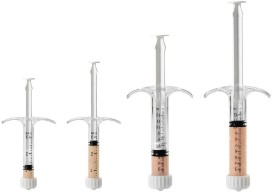
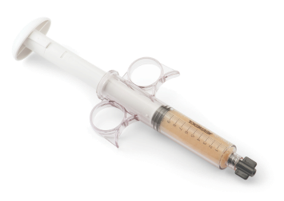
6 Syringes and needles Polypropylene, stainless steel, and elastomer components Individually packed sterile units; assorted volumes and gauges Sterile, single-use ISO 7886-1 for manually operated syringes; ISO inject? 7864 for sterile hypodermic needles Check dead space, leak resistance, graduated accuracy, needle dimensions, protective-cap integrity, and applicable market authorization.
7 Suction and drainage products Medical-grade PVC, silicone, polyurethane, or stainless steel Catheters, tubing sets, reservoirs, or complete kits Sterile, single-use ISO 10993 series for biological evaluation; ISO 11607 for sterile packaging Assess flow rate, kink resistance, connector compatibility, radiopacity where required, biocompatibility, and drainage capacity.
8 Electrosurgical accessories Conductive metal, polymer insulation, and adhesive materials Disposable electrodes, return plates, pencils, and cables Sterile or non-sterile IEC 60601-2-2 for high-frequency surgical equipment and accessories Confirm connector compatibility, insulation quality, electrical performance, adhesive properties, and maximum rated settings.
9 Reusable surgical instruments Stainless steel, titanium, or tungsten carbide inserts Individual instruments, trays, or procedure sets Non-sterile before processing ISO 17664-1 for processing instructions for reusable medical devices Review corrosion resistance, joint performance, surface finish, identification markings, cleaning validation, and sterilization instructions.
10 Sterilization packaging and indicators Medical-grade paper, nonwoven material, polymer film, and chemical indicators Pouches, reels, wraps, containers, and indicator strips Supports sterile processing ISO 11607-1 and ISO 11607-2 for packaging; ISO 11135 for ethylene oxide; ISO 11137 for radiation; ISO 17665 for moist heat Verify process compatibility, seal strength, microbial barrier performance, indicator response, storage conditions, and event-related shelf-life validation.
Procurement note: Product specifications, regulatory status, packaging configuration, and shelf life vary by manufacturer, destination market, and intended use. Global buyers should request current technical files, certificates, batch records, test reports, and market-specific conformity documentation before placing an order.
Reference sources: Global surgical volume figure: The Lancet Commission on Global Surgery, 2015, which reported an estimated 312.9 million surgical procedures performed worldwide in 2012. Technical references include ISO 13485, ISO 10993, ISO 11607, ISO 17664-1, ISO 11135, ISO 11137, ISO 17665, IEC 60601-2-2, EN 14683, and ASTM F2100.

Access Gap: 5 Billion People Lack Safe, Affordable Surgical Care

10 Best Surgical Products Suppliers for Global Buyers

Access Gap: 5 Billion People Lack Safe, Affordable Surgical Care

The Lancet Commission on Global Surgery estimated that five billion people lack safe, affordable surgical care. It also reported that 143 million additional surgical procedures are needed each year. These figures reveal more than a clinical shortage. They show a procurement and distribution challenge.

Reliable suppliers can help close this gap through consistent quality, transparent documentation, and practical product support. Buyers should examine sterilization records, material specifications, shelf-life controls, and traceability systems. Packaging must also survive long transport, heat, humidity, and rough handling. The World Health Organization identifies surgical safety and quality systems as essential to stronger health services. Still, many purchasing teams focus too heavily on unit price. That is a costly blind spot. The cheapest product may require more replacements, training, or waste management.

Tips: Request samples, certificates, inspection records, and maintenance guidance before large orders. Compare total ownership costs, not only purchase prices. Confirm whether local clinicians can use the products confidently. A usable product matters more than an impressive catalogue.

The Lancet Commission also found that about 33 million people face catastrophic health expenditure from surgical costs annually. Supplier selection should therefore include affordability and continuity. Smaller hospitals may need modular instruments, clear instructions, and dependable spare parts. Buyers should document performance after delivery, including defects and staff feedback. Perfect systems do not exist. Better purchasing begins with honest measurement.

Supplier Evaluation Criteria: ISO 13485, FDA 510(k), and EU MDR

For global buyers, the best surgical products suppliers are not judged by catalog size alone. Their quality systems must withstand document checks, factory visits, and shipment-level verification. ISO 13485 certification is a useful starting point, but buyers should confirm its scope, expiry date, and certified production sites. The certificate should cover the actual surgical products offered.

Look closer. Ask for batch records, sterilization validation, material specifications, and complaint-handling procedures. A working CAPA system matters. So does traceability from raw material to finished carton. During supplier evaluations, request recent audit findings and evidence of corrective actions. Some records look complete but reveal weak follow-up. That gap deserves attention.

FDA 510(k) clearance applies to a specific medical device, not automatically to every product from a supplier. Buyers should verify the clearance number, intended use, product code, and legal manufacturer. For European sales, review EU MDR classification, technical documentation, Declaration of Conformity, UDI obligations, and notified body involvement where required. Check post-market surveillance and vigilance procedures too. EU MDR paperwork can be accurate yet poorly connected to daily production. Ask how changes, complaints, and field information reach the quality team. Test samples, inspect labels, and compare packaging with approved documents. A careful supplier welcomes difficult questions. My own evaluation standards still need refinement, especially when local responsibilities differ between importer, distributor, and manufacturer.

Ten Surgical Suppliers Compared by Portfolio, Reach, and Compliance

The ten surgical suppliers differ sharply in portfolio depth, regional reach, and compliance discipline. Some offer basic instruments, sterile procedure packs, and wound-care products. Others provide broader hospital ranges, including operating-room equipment and diagnostic accessories. A larger catalogue is not always better. Buyers should match product depth with actual clinical demand.

Reach matters when shipments cross borders. Compare warehouse locations, export experience, lead times, and after-sales support. Ask whether the supplier maintains buffer stock for urgent orders. During evaluation, request batch records, product specifications, sterilization details, and traceability procedures. Review quality certifications, but do not treat a certificate alone as proof of performance. Local registration and import rules still apply.

Tips: Build a comparison sheet with four columns: portfolio, delivery reach, compliance evidence, and service response. Test a small approved order before signing a wider contract. Inspect packaging on arrival, including seal condition, lot numbers, and expiry dates. A neat spreadsheet can still mislead. I have seen suppliers respond quickly during sales discussions, then provide vague technical documents. That gap deserves attention. Suppliers with clear documentation, realistic delivery promises, and consistent communication usually create fewer disruptions for global buyers.

Global Buyer Checklist: UDI Traceability, Sterility, and Total Cost of Ownership

10 Best Surgical Products Suppliers for Global Buyers

Global Buyer Checklist: UDI Traceability, Sterility, and Total Cost of Ownership

Supplier ranking should begin with traceability, not catalogue size. The FDA’s Unique Device Identification framework connects device labels with production data, recall records, and clinical use. Ask suppliers for UDI-DI and UDI-PI details, database entries, and readable barcodes. Test one carton before approving a full shipment. A spreadsheet is not enough.

Sterility evidence deserves equal scrutiny. WHO’s Global Report on Infection Prevention and Control states that healthcare-associated infections affect about 7 in 100 acute-care patients in high-income countries, and 15 in 100 in low- and middle-income countries. Request sterilization method, cycle records, package integrity data, and expiry validation. ISO 11135 and ISO 11137 references help, but certificates alone can mislead. Inspect the actual label.

Total cost includes more than the purchase price. Include freight, customs, storage, staff training, rejected units, and disposal. WHO’s Global Patient Safety Action Plan reports that one in ten patients experiences harm in healthcare, with more than half considered preventable. Reliable documentation can reduce avoidable delays and product confusion. I would also compare supplier response times during a simulated recall. That test is imperfect, but revealing. A low quote may become expensive when traceability fails.

Global Buyer Checklist for Surgical Product Suppliers

The chart shows the number of core evidence checks recommended before supplier approval. The framework reflects common requirements involving UDI traceability, sterilization validation, medical-device quality systems, total cost of ownership, and supply continuity.

Reference framework: FDA UDI requirements, EU MDR device identification principles, ISO 13485, ISO 14971, ISO 11135, ISO 11137, ISO 17665, and ISO 11607. Sterile medical-device processes commonly target a sterility assurance level of 10-6. Checklist counts are procurement screening points rather than supplier rankings.