China Top Bone Graft Material Manufacturers and Suppliers

China’s bone graft material industry is expanding alongside spinal fusion, dental restoration, trauma care, and aging-related orthopedic demand. Market intelligence reports show steady global growth, although estimates vary by product scope and regional coverage.

Fortune Business Insights valued the global bone grafts and substitutes market at approximately USD 3.2 billion in 2023. Grand View Research also forecasts sustained growth through the next decade. These figures include synthetic substitutes, demineralized bone matrix, and other biological materials. Definitions differ. That matters.

China now hosts manufacturers supplying calcium phosphate ceramics, bioactive glass, collagen-based products, and composite graft substitutes. Leading suppliers increasingly emphasize ISO 13485 quality systems, traceable raw materials, sterilization validation, and clinical documentation. Domestic registration under the National Medical Products Administration remains essential for compliant market access.

This guide examines China’s top bone graft material manufacturers and suppliers through product capability, regulatory readiness, production scale, and export experience. It also considers whether published evidence supports a supplier’s claims. A polished brochure is not enough.

Buyers should review technical files, batch consistency, shelf-life data, packaging integrity, and post-market feedback. Hospital adoption often depends on handling characteristics, pore structure, resorption behavior, and surgeon familiarity. Price alone can hide important differences.

Reports provide useful direction, not final purchasing decisions. Manufacturer audits and independent clinical evaluation still matter. The market is promising, but supplier quality remains uneven. Careful comparison is necessary.

China Top Bone Graft Material Manufacturers and Suppliers

Bone Graft Materials: Types, Uses, and Clinical Applications in China

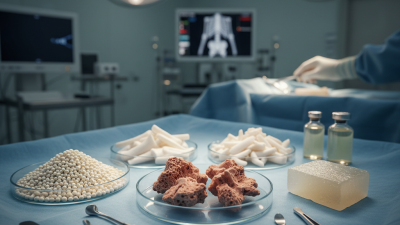
Bone graft materials used in China include autografts, allografts, animal-derived grafts, and synthetic substitutes. Each has different handling properties and biological characteristics. Autografts come from the patient and contain living bone, but harvesting adds another surgical site. Allografts avoid that extra procedure, while processing can affect their structure and performance. Synthetic options, such as calcium phosphate ceramics and bioactive glass, can be shaped for specific defects. None is a universal solution. Fit matters.

Clinical use depends on the size and location of the bone defect, the patient’s health, and the planned procedure. In dental care, grafts may support bone volume before implant placement. In spinal surgery, selected materials can help fill spaces where fusion is intended. Trauma and reconstructive procedures may also require grafting to bridge or support damaged bone. Surgeons weigh handling, resorption, mechanical support, and evidence for the intended use. Not every defect. A material that works well in a small dental site may not suit a load-bearing area. Clinical outcomes also depend on surgical technique and follow-up, so claims should be interpreted cautiously. Some choices remain imperfect, and long-term performance can vary between patients.

China’s Bone Graft Material Industry and Manufacturing Landscape

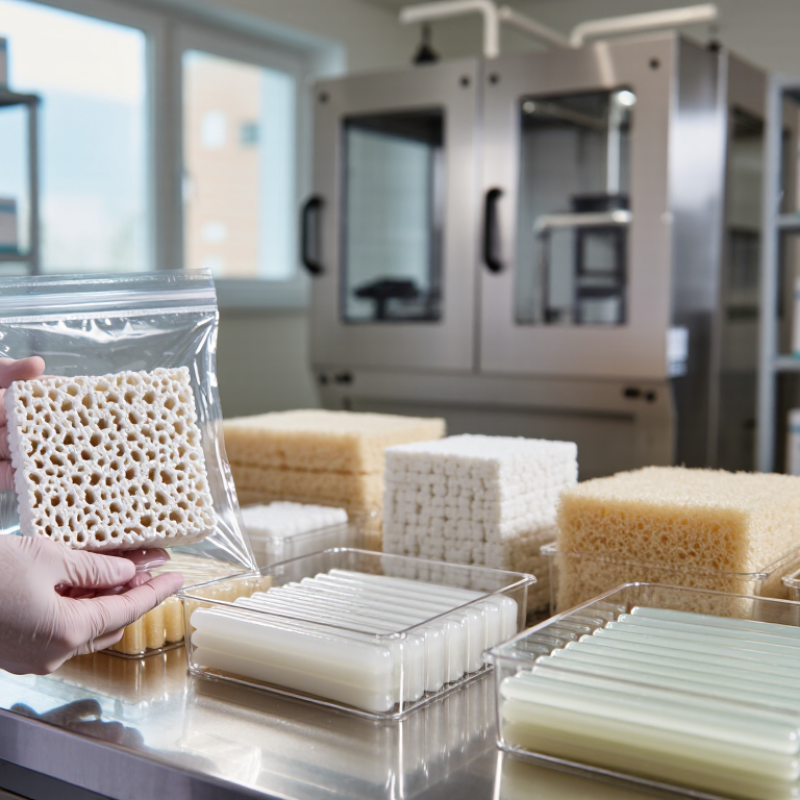
China’s bone graft material industry is developing across medical device manufacturing, biomaterials research, and clinical application. Manufacturers commonly work with synthetic ceramics, demineralized bone materials, and collagen-based carriers. Production sites often use controlled mixing, molding, drying, and sterilization processes. Each stage can influence porosity, strength, and handling performance.

Quality systems are central to this sector. Reliable suppliers typically maintain documented raw-material controls, batch records, environmental monitoring, and traceability procedures. Testing may examine chemical composition, particle size, compressive behavior, sterility, and packaging integrity. These checks support regulatory submissions and help hospitals manage clinical risk. Details matter. However, laboratory results do not always predict surgical performance. Surgeon feedback and longer clinical observation remain important.

China also benefits from a broad industrial supply chain, including precision equipment, polymer processing, packaging, and testing services. Research institutions and manufacturers increasingly cooperate on scaffold design, controlled degradation, and biologically active surfaces. Manufacturing capacity can be impressive, but capacity alone is not proof of consistency. Some suppliers still need stronger international documentation, clearer technical files, and more transparent post-market data. Buyers should review certificates, validation reports, product specifications, and change-control practices before cooperation. Not every plant qualifies. A careful audit may reveal differences between pilot production and stable commercial manufacturing.

Leading Chinese Bone Graft Material Manufacturers and Suppliers

Leading Chinese Bone Graft Material Manufacturers and Suppliers

China’s bone graft material sector is expanding with orthopedic demand and improved manufacturing controls. Grand View Research estimated the global bone grafts and substitutes market at over USD 3 billion in 2023. Its forecast also indicates steady growth through 2030. This trend creates room for leading Chinese bone graft material manufacturers and suppliers.

Many qualified suppliers produce hydroxyapatite, beta-tricalcium phosphate, collagen-based materials, and composite scaffolds. Their facilities commonly use controlled sintering, porosity testing, and biocompatibility evaluation. Some suppliers also provide customized granules, blocks, and injectable formulations for dental or orthopedic use. Product quality still depends on traceability, sterilization validation, and consistent raw material sourcing. A polished catalog is not enough.

The China market also benefits from domestic registration pathways and growing clinical research. Buyers should check NMPA documentation, ISO 13485 certification, batch records, and independent test reports. According to MarketsandMarkets’ 2024 analysis, synthetic bone graft substitutes are gaining attention because of supply stability and controlled composition. Yet clinical suitability varies by defect size, surgical technique, and patient condition. More evidence is always better.

Tips: Request recent certificates, not scanned promises. Compare porosity, compressive strength, resorption data, and packaging integrity. Ask for sample evaluation under written specifications. Suppliers should explain storage limits clearly. A factory visit may reveal process gaps that documents hide.

China Top Bone Graft Material Manufacturers and Suppliers – Leading Chinese Bone Graft Material Manufacturers and Suppliers

Material Category Typical Composition or Source Common Product Forms Typical Application Context Supplier Information to Verify
Allograft Human donor bone tissue, processed for clinical use. Granules, chips, blocks, or other forms depending on the product. Used in selected bone-repair procedures; suitability depends on the product and clinical indication. Applicable authorization, donor-tissue sourcing and screening information, processing details, traceability, and storage requirements.
Xenograft Animal-derived mineralized tissue, commonly processed to remove organic components. Granules, blocks, or shaped graft pieces. Used as a bone-graft substitute in selected dental, oral, maxillofacial, or orthopedic procedures, depending on its approved use. Animal source, manufacturing and purification process, applicable product authorization, sterilization method, and labeled indications.
Hydroxyapatite (HA) Calcium-phosphate ceramic with a composition similar to the mineral component of bone. Granules, porous blocks, or shaped ceramic components. Used in selected bone-defect filling and reconstruction applications; performance depends on formulation and design. Composition, porosity, particle-size range, mechanical properties where relevant, sterilization, and product-specific authorization.
Beta-tricalcium phosphate (β-TCP) Synthetic calcium-phosphate ceramic. Granules, porous blocks, or other molded forms. Used as a resorbable bone-graft substitute in selected indications; resorption characteristics vary by product. Material composition, porosity, resorption-related product data, sterilization, shelf life, and labeled indications.
HA/β-TCP composite A synthetic composite combining hydroxyapatite and beta-tricalcium phosphate; proportions vary by product. Granules, porous blocks, or shaped graft substitutes. Designed for selected bone-repair applications; properties depend on composition and manufacturing process. Component ratio, material characterization, product-specific performance data, sterilization, and regulatory documentation.
Bioactive glass Silicate-based glass containing oxides such as silica, calcium, sodium, or phosphorus; formulation varies. Particles, granules, or other product-specific forms. Used in selected bone-graft or bone-defect applications where the product is indicated. Glass composition, particle characteristics, clinical evidence relevant to the intended use, sterilization, and applicable authorization.
Collagen-based composite Collagen combined with a mineral component or another graft material; source and formulation vary. Moldable strips, plugs, granules, or composite forms. May be used as a handling aid or graft substitute in selected procedures, subject to product labeling. Collagen source, composition, biological-safety documentation, handling instructions, storage conditions, and labeled indications.

Note: This table describes bone-graft material categories, not a ranked list of manufacturers or suppliers. Product availability, classification, authorization, and permitted indications should be verified against current Chinese regulatory records and the product labeling. Clinical selection should be made by qualified healthcare professionals.

Quality Standards, Certifications, and Product Evaluation

When evaluating bone graft material manufacturers and suppliers in China, quality begins with a documented management system. ISO 13485 certification shows controlled medical-device processes, but it is not a substitute for product approval. Ask for the certificate’s scope, validity, and issuing body. Check whether it covers the exact material and manufacturing site.

Product evaluation should follow the intended clinical use. Review raw-material specifications, particle size, porosity, moisture content, and packaging integrity. Biological safety evidence should address relevant ISO 10993 tests, including cytotoxicity and sensitization where applicable. Sterilization validation matters too. Request the sterilization method, validated dose or cycle, and residual testing records. Small details matter.

Traceability is practical evidence of reliability. A strong supplier can connect one package to its batch record, test results, and release decision. Look for certificates of analysis, environmental monitoring data, and stability or shelf-life studies. Independent laboratory reports can strengthen confidence, especially for new suppliers. Still, no certificate proves every shipment is perfect. Testing may miss a handling problem, and documents can become outdated. A factory visit, sample assessment, and technical interview reveal gaps that paperwork cannot. Experienced buyers should record concerns, compare evidence, and require corrective action before placing larger orders.

How to Select a Reliable Bone Graft Material Supplier in China

Selecting a reliable bone graft material supplier in China requires more than comparing prices. Start by checking manufacturing experience, quality systems, and product documentation. A capable supplier should explain material sources, processing controls, sterilization methods, and shelf-life testing clearly. Request certificates, batch records, inspection reports, and traceability procedures. Vague answers deserve caution.

Arrange a video audit or an in-person factory visit when possible. Observe cleanroom access, packaging areas, storage temperatures, and sample handling. Ask how the supplier manages complaints, recalls, and changes in raw materials. Independent testing can verify composition, sterility, strength, and biological performance. Do not rely only on polished brochures. Real evidence matters.

Tips: Compare at least three qualified suppliers. Ask for recent, anonymized batch documents. Confirm whether samples match future production. Discuss packaging damage during transport. Clarify lead times and minimum order quantities. A written quality agreement can prevent later confusion. Also, check whether technical staff understand your intended clinical application and destination-market requirements. Some suppliers respond quickly but explain poorly. That is a warning sign. Others may have strong laboratories yet weak communication. My own review process would include both strengths and uncomfortable gaps, because no supplier is perfect. Reliable cooperation grows through transparent records, consistent samples, and practical conversations.