| Molecular identity | Generic APIs can provide the specified peptide sequence without relying on a proprietary product platform. | Supports studies that require a defined active peptide for assay development, formulation screening, or reference comparisons. | Confirm sequence, molecular mass, salt form, terminal modifications, and counter-ions. |
| Purity profile | Material is commonly offered with a stated purity specification, often determined by chromatographic testing. | A defined purity level helps researchers select material appropriate for analytical, biochemical, or preclinical work. | Review the certificate of analysis, assay method, impurity profile, and acceptance criteria for each lot. |
| Analytical characterization | Generic peptide materials can be evaluated using established techniques such as HPLC and mass spectrometry. | Independent analytical confirmation improves confidence in identity and batch-to-batch comparability. | Check whether chromatograms, mass spectra, water content, residual solvents, and related-substance data are available. |
| Sequence and modification flexibility | Research-grade peptide APIs may be specified with modifications such as amidation, acetylation, phosphorylation, or labeling, when technically feasible. | Enables structure–activity studies, stability investigations, assay controls, and mechanistic experiments. | Verify modification location, substitution level, stereochemistry, labeling efficiency, and purification requirements. |
| Cost management | Non-proprietary sourcing can reduce dependence on branded research products and may offer more flexible quantity options. | Lower material expenditure can support replicate experiments, pilot studies, and expanded screening programs. | Compare total cost, including synthesis, purification, testing, shipping, storage, and any custom documentation. |
| Batch size selection | Supply can often be requested in quantities suited to discovery, analytical, or process-development work. | Researchers can limit unused inventory while increasing quantity when a method or study advances. | Confirm minimum order quantity, available lot size, fill volume, and whether larger batches require a new qualification. |
| Batch-to-batch consistency | A defined specification and documented analytical testing can support comparison across production lots. | Improves reproducibility when experiments are repeated over time or across laboratories. | Compare certificates of analysis from multiple lots and establish an internal lot-release procedure. |
| Documentation and traceability | Research-use materials may be supplied with product specifications, lot numbers, test results, and storage instructions. | Clear records support laboratory notebooks, internal audits, method transfer, and study reproducibility. | Request certificates of analysis, safety data sheets, manufacturing dates, retest dates, and chain-of-custody information. |
| Storage and handling | Peptide APIs are generally supplied with defined storage and handling recommendations based on their stability characteristics. | Appropriate protection from moisture, heat, light, and repeated freeze–thaw exposure can help preserve material quality. | Follow the material-specific instructions and evaluate stability after reconstitution, dilution, or repeated handling. |
| Assay suitability | A specified peptide API can serve as a test article, calibration material, negative control, or process-development input, depending on qualification. | Supports biochemical assays, receptor-binding studies, analytical method development, and formulation research. | Assess biological activity, endotoxin level, bioburden, sterility, and other requirements relevant to the intended experiment. |
| Regulatory and intended-use status | Generic peptide APIs can be useful for research without implying approval for human or animal administration. | Helps laboratories select material according to the actual purpose and compliance requirements of the study. | Confirm whether the material is research-use-only, GMP-produced, sterile, endotoxin-controlled, or suitable for any regulated application. |
| Overall research benefit | Generic peptide APIs can combine specification flexibility, documented quality attributes, and potentially more efficient procurement. | Provides a practical basis for reproducible and scalable laboratory studies when the material is properly qualified. | Select based on sequence, purity, analytical evidence, stability, biological suitability, documentation, and intended use—not price alone. |






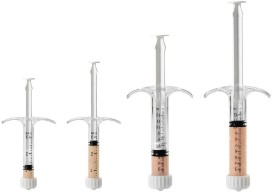



 System Features
 Key Features
 Key Features
 Key Features
 Key Features
 Key Features
 Key Features









 Key Features
 Key Features
 Key Features