| Output rate | Approximately 2–6 finished spools per operator-hour, depending on product size and material. | Approximately 8–20 finished spools per machine-hour for comparable products. | Higher throughput supports larger export orders and reduces production bottlenecks. |
| Winding tension consistency | Often varies with operator technique, material condition, and spool fill level. | Closed-loop or programmed tension control can maintain a more consistent winding profile. | Improves product uniformity across multiple shifts and production locations. |
| Material utilization | Typical usable-material yield: about 94%–98%, with higher variation during manual trimming and changeovers. | Typical usable-material yield: about 97%–99% when recipes and cut-off settings are optimized. | Lower scrap rates reduce raw-material costs and simplify sustainability reporting. |
| Changeover time | Approximately 20–60 minutes, depending on tooling, spool dimensions, and adjustments. | Approximately 5–20 minutes with preset recipes and standardized tooling. | Makes smaller international batches more economical and improves scheduling flexibility. |
| Labor requirement | Usually requires continuous operator attention for feeding, alignment, inspection, and unloading. | One trained operator can often supervise multiple automated functions, subject to risk assessment and line design. | Reduces repetitive manual work and helps address labor shortages in different regions. |
| Quality inspection | Primarily dependent on visual checks and operator records. | Can integrate length measurement, diameter checks, tension monitoring, alarms, and batch records. | Improves repeatability and provides clearer documentation for international customers. |
| Unplanned downtime | More sensitive to inconsistent feeding, operator fatigue, tangles, and manual adjustment errors. | Sensors and programmed fault detection can identify material breaks, overloads, and alignment issues earlier. | Supports more predictable production planning and delivery performance. |
| Production standardization | Results can differ between operators, shifts, and facilities. | Digital recipes can standardize speed, tension, length, acceleration, and spool specifications. | Simplifies replication of manufacturing processes across global plants. |
| Energy and floor-space efficiency | More floor space may be needed for work-in-process, manual handling, and inspection stations. | Combines multiple winding and handling steps in a compact, controlled work cell. | Can reduce internal handling and improve use of valuable factory space. |
| Scalability | Capacity increases usually require additional operators and workstations. | Capacity can be expanded through additional machines, parallel cells, or integrated lines. | Allows production capacity to grow more systematically with international demand. |




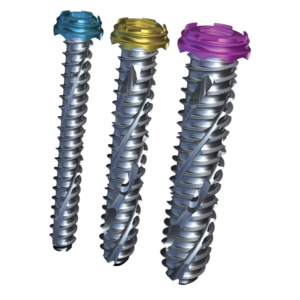

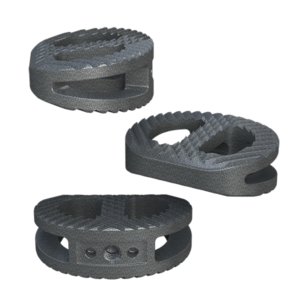 System Features
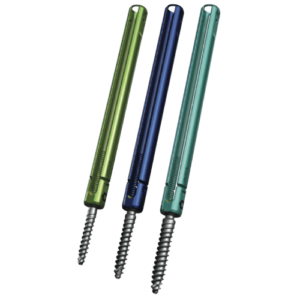 Key Features
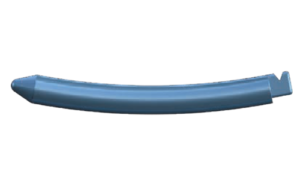 Key Features
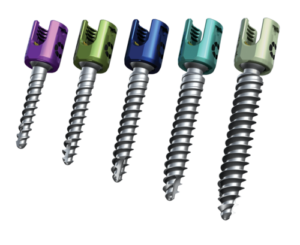 Key Features
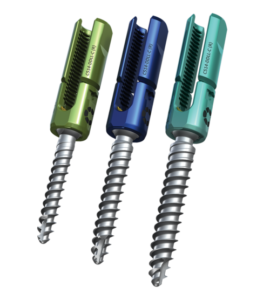 Key Features
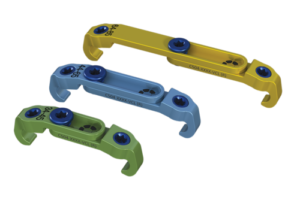 Key Features
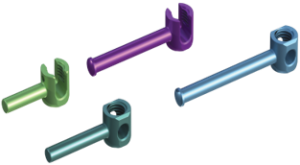 Key Features
 Key Features
 Key Features
 Key Features