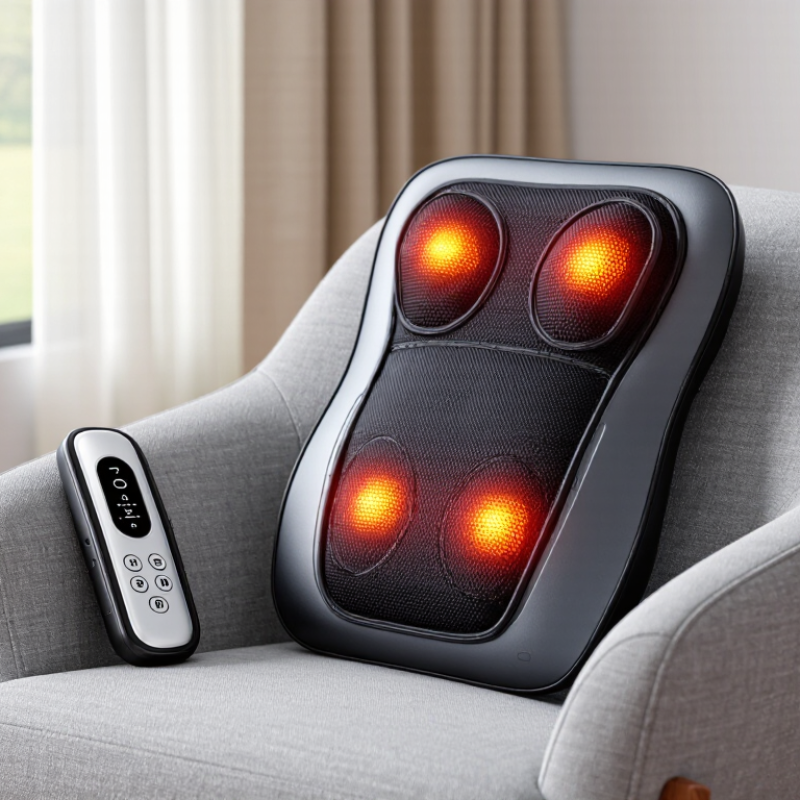
| Shiatsu Kneading Mechanism | Uses rotating massage nodes to imitate circular kneading pressure and help relax tense muscles. | Usually 2 to 4 rotating nodes per massage head, with clockwise and counterclockwise movement. | Look for smooth rotation, balanced pressure, and nodes that do not pinch the skin. | Users who prefer firm, deep-kneading massage. |
| Neck and Shoulder Coverage | A wider treatment area can address the sides of the neck, upper shoulders, and trapezius muscles. | Adjustable arm loops or handles; coverage varies by user height and shoulder width. | Confirm that the massage heads align comfortably with your neck and shoulder muscles. | People experiencing desk-related neck and shoulder tightness. |
| Back Massage Reach | A longer massage panel can cover the upper, middle, and lower back more effectively. | Many shoulder-style models provide upper-back coverage, while extended designs reach farther down the back. | Check the panel length and whether the nodes can be positioned over the areas you want to treat. | Users who want one device for both neck and back relaxation. |
| Heat Function | Gentle warmth may improve comfort and help loosen stiff muscles during a massage session. | Typically low-temperature therapeutic warmth with a separate on/off control. | Choose independently controlled heat, even temperature distribution, and overheat protection. | People who enjoy warm massage and experience occasional muscle stiffness. |
| Intensity Settings | Adjustable intensity makes it easier to find a comfortable pressure level. | Commonly includes 2 or 3 speed or intensity levels. | Avoid models that feel excessively forceful even at the lowest setting. | Households with different massage preferences. |
| Massage Direction | Alternating direction can create a more varied sensation and help prevent repetitive pressure in one direction. | Clockwise and counterclockwise rotation, either automatically or through a control button. | Check whether direction changes are smooth and easy to operate. | Users who want a more natural-feeling massage pattern. |
| Session Timer | An automatic shutoff helps limit continuous use and improves convenience. | Many devices use an automatic shutoff after approximately 15 minutes. | Select a model with a clearly stated timer and easy restart controls. | Users who want a simple, routine relaxation session. |
| Power Options | The power source determines whether the massager is mainly for home, office, or travel use. | AC adapters are common; some models also include rechargeable batteries or vehicle adapters. | Check cord length, charging time, battery runtime, and compatibility with your intended location. | Home users, office workers, or travelers depending on the configuration. |
| Ergonomic Handles | Handles allow users to control pressure and position the massage heads more accurately. | Soft, adjustable loop handles are commonly used on handheld shoulder massagers. | Ensure the handles are long enough and comfortable to hold without straining the wrists. | Users who want direct control over massage pressure. |
| Material and Cushioning | Breathable fabric and padded surfaces improve comfort during longer sessions. | Common materials include mesh, synthetic leather, foam padding, and textile covers. | Look for durable stitching, smooth edges, and removable or wipe-clean covers. | Frequent users who prioritize comfort and easy maintenance. |
| Noise Level | Quieter operation is less distracting when reading, working, or relaxing. | Noise varies according to motor design, speed, load, and surface contact. | Read independent reviews and check the return policy if sound level is important. | Office users and people who prefer a quiet relaxation environment. |
| Weight and Portability | A lighter design is easier to move, store, and use without tiring the arms. | Neck and shoulder massagers commonly weigh about 1 to 3 kg, depending on construction and battery size. | Balance weight against motor strength, stability, and ease of storage. | Users who move the device between rooms or take it on trips. |
| Safety and User Guidance | Clear instructions help users operate the device responsibly and recognize situations requiring caution. | Instructions should include time limits, cleaning guidance, heat precautions, and contraindications. | People with injuries, reduced sensation, circulation problems, or medical conditions should seek professional advice before use. | All users, especially those with health concerns or sensitivity to heat and pressure. |





 System Features
 Key Features
 Key Features
 Key Features
 Key Features
 Key Features
 Key Features
 Key Features
 Key Features
 Key Features