Understanding Kinetin (6-KT): The Ultimate Technical Guide to Functions, Advantages, and Commercial Applications
Soyoung Shenzhen, China — In modern agriculture, plant tissue culture, and functional formulations, Plant Growth Regulators (PGRs) play a vital role in maximizing crop yields, enhancing stress resilience, and delaying cell senescence. Among the most widely researched and utilized synthetic cytokinins is Kinetin, commercially known as 6-KT or 6-Furfurylaminopurine (CAS No.: 525-79-1).
As a leading global supplier of high-purity agricultural and fine chemical raw materials, SOYOUNG (Shenzhen Soyoung Technology Materials Co., Ltd.) provides a comprehensive technical breakdown of Kinetin 6-KT—covering its chemical profile, key functional advantages, field applications, and practical handling guidelines for global B2B buyers.
1. What is Kinetin (6-KT)?
Kinetin (chemical formula: C10H9N5O) belongs to the cytokinin class of plant hormones. Originally discovered as a compound that promotes cell division, 6-KT is a adenine-type cytokinin derivative that mimics naturally occurring plant signals.
Core Specifications of Commercial Kinetin 6-KT
Chemical Name: 6-Furfurylaminopurine / N6-Furfuryladenine
CAS Number: 525-79-1
Appearance: Off-white to white crystalline powder
Purity Grade: >98% Technical Concentrate (TC)
Solubility: Soluble in dilute acids, dilute alkalis, and organic solvents (e.g., DMSO); sparingly soluble in water.
2. Key Advantages & Features of Kinetin (6-KT)
Compared to other plant growth regulators such as Auxins or Gibberellins (GA3), Kinetin occupies a unique functional position in plant biotechnology and commercial crop management.
Key Technical Features:
High Cell Division Activity: Triggers rapid mitosis and cellular elongation when used in precise ratios with auxins (e.g., NAA or IAA).
Strong Anti-Senescence Effect: Inhibits protein and chlorophyll breakdown, keeping plant tissues greener and functional for longer periods.
Apical Dominance Reversal: Stimulates the growth of lateral buds, leading to bushier growth, increased flowering sites, and higher crop yields.
Broad Compatibility: Works synergistically with fertilizers, biostimulants, and other growth factors without causing toxicity when applied at recommended dosages.
3. Physiological Functions & How It Works
Kinetin regulates several critical biochemical pathways in plants. Understanding these mechanisms allows formulators and growers to optimize application timing:
A. Promoting Cell Division and Tissue Differentiation
In plant tissue culture, the ratio of Cytokinin (6-KT) to Auxin (NAA/IBA) determines tissue fate:
High Kinetin / Low Auxin: Promotes shoot formation.
Balanced Kinetin & Auxin: Drives callus growth and cell proliferation.
B. Delaying Leaf Senescence and Preserving Quality
Kinetin acts as a powerful sink for nutrients. By mobilizing amino acids and inorganic salts toward treated leaves, it preserves chlorophyll structures, extends the photosynthetic lifespan, and improves post-harvest shelf life for leafy vegetables and cut flowers.
C. Breaking Seed & Bud Dormancy
6-KT can overcome seed dormancy induced by environmental stress or inhibitors (e.g., abscisic acid), promoting uniform germination in crops like lettuce, tobacco, and various ornamentals.
D. Stress Tolerance Enhancement
Under abiotic stress conditions—such as drought, salinity, or temperature fluctuations—Kinetin helps stabilize cellular membranes and anti-oxidative enzyme systems, allowing plants to recover faster.
4. Practical Applications & Recommended Dosages
Kinetin 6-KT is widely used across three major sectors: Agriculture, Plant Tissue Culture, and Cosmetic Formulations.
Application Sector
Target Purpose
Typical Dosage / Concentration
Plant Tissue Culture
Micropropagation & Shoot Induction
0.5 - 2.0mg/L in MS media
Foliar Spray (Vegetables/Fruits)
Delay leaf aging, enhance fruit set
10 - 20mg/L liquid spray
Seed Treatment
Break dormancy, improve germination
10 - 50mg/L seed soak solution
Cosmetic Formulations
Anti-aging skincare & cell revitalization
0.01% - 0.1% in topical formulations
Note: Pre-dissolve Kinetin in a small amount of 0.1 N HCl, NaOH, or ethanol before diluting with water for field or laboratory preparation.
5. Why Source Kinetin 6-KT from SOYOUNG?
Selecting a reliable partner for agricultural raw materials requires strict quality control, transparent documentation, and stable logistics. SOYOUNG (Shenzhen Soyoung Technology Materials Co., Ltd.) stands out as a trusted international chemical partner:
Guaranteed High Purity ($\ge 98\%$ TC): Every batch undergoes rigorous HPLC testing to ensure active ingredient consistency.
Complete Regulatory Support: Full access to COA (Certificate of Analysis), SDS (Safety Data Sheet), and technical documentation for smooth customs clearance.
Flexible Packaging & Supply: Available from laboratory sample sizes to multi-ton commercial bulk shipments.
Global Distribution Efficiency: Direct export capabilities from Shenzhen with fast turnaround times to North America, Europe, Southeast Asia, and South America.
FAQ: Frequently Asked Questions About Kinetin (6-KT)
Q1: What is the difference between Kinetin (6-KT) and 6-BA (6-Benzylaminopurine)?
Answer: Both are synthetic cytokinins. However, 6-BA is generally more potent at lower concentrations for shoot proliferation, while Kinetin (6-KT) offers a milder, more controllable response—making 6-KT safer for delicate tissue culture species and premium anti-aging formulations.
Q2: How should Kinetin powder be stored?
Answer: Store Kinetin in a cool, dry, and well-ventilated place away from light (recommended temperature: 2–8°C for long-term storage). Keep containers tightly sealed to avoid moisture absorption.
About SOYOUNG
SOYOUNG Technology Materials Co., Ltd.is a leading supplier based in Shenzhen, China, specializing in fine chemical raw materials, plant growth regulators, cosmetic ingredients, and bio-additives.Committed to high quality and client-centric service, SOYOUNG supports agriculture and chemical manufacturing worldwide.
Business Inquiries: Contact our technical sales team for sample requests, full product catalogs, and customized pricing.
PROWESS®LAMINOPLASTY SYSTEM
The PROWESS System provides a comprehensive solution for Laminoplasty procedures and consists of streamlined instrumentation and a variety of plate and spacer options for intraoperative adaptability. The instrumentation are intuitive and maintain secure connections to the implants. The implants are offered in a range of sizes and are color coded for easy visual identification.
Prowess Spacer Plates
4-12mm lengths (in 2mm increments) that work with various Spacers
8mm across neck, 5.7mm across center graft window
Color-coded plates allow for easy identification
Double-bend design, low-profile to allow further contouring
Anterior ridges resist slippage and increase torsional stability
Accepts Ø2.3 x 4mm Self-Tapping Bone Screw for assembly
Prowess Hook Plates
4-12mm lengths (in 2mm increments) that work with various Spacers
8mm across neck
Color-coded plates allow for easy identification
Double-bend design, low-profile to allow further contouring
Anterior ridges resist slippage and increase torsional stability
Prowess Hinge Plates
8mm across neck
Singe-bend design, low-profile to allow further contouring
Anterior ridges resist slippage and increase torsional stability
Prowess Spacers
Titanium or PEEK construction
6mm wide, and 4mm minimum height from posterior face to anterior curve
Implant Inserter grip features
Medial, lateral, and anterior anatomical curvatures
Graft cavities on all sizes
Accepts Ø2.3 x 4mm Self-Tapping Bone Screw for assembly
Titanium Spacers are color-coded for easy identification
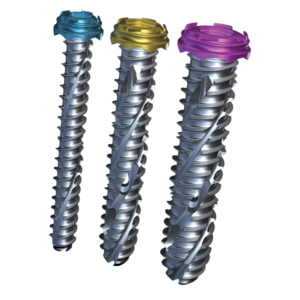
Prowess Screws
Ø2.3 and Ø2.7 in 4-12mm lengths (in 2mm increments)
Self-Drilling and Self-Tapping
Color-coded screws allow for easy identification
Works with self-retaining Screw Driver
Same Ø2.3 x 4mm Self-Tapping bone screw assembles Spacer to Spacer Plate
CuriGraft Viable Allogenic Bone Matrix
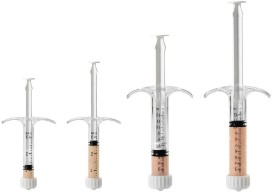
CuriGraft® Viable Allogenic Bone Matrix is the next generation allograft containing the three key elements ideal for bone formation, offering a variety of clinical applications, including the spine, upper extremity, foot and ankle and orthopedic oncology.
Key Features
Osteoconductive three-dimensional scaffold with cortical and cancellous components
Demineralized cortical bone scaffold. Demineralized cortical bone has been identified to have osteoinductive potential1
Viable endogenous bone cells to support osteogenic healing processes
DMSO-FREE cryoprotectant, requiring no rinsing or decanting
Proprietary mixture of mineralized cancellous bone along with demineralized cortical fibers
Easy-to-use syringe, just thaw and use!
Four-hour working window for implantation post thaw
Storage: -65°C or colder
Size
Product Code
1.0cc
C034-0001-MCBMV
2.5cc
C034-0025- MCBMV
5.0cc
C034-0005- MCBMV
10.0cc
C034-0010- MCBMV
Reference: 1) Gruskin, E. et.al., Demineralized bone matrix in bone repair: history and use. Advanced Drug Delivery Reviews, 2012. 64:1063-1077 Biologics
CuriGraft® DBM Putty - Demineralized Bone Matrix Putty
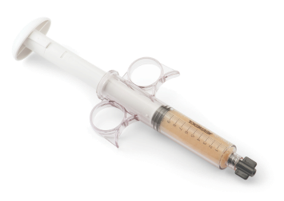
CuriGraft® DBM Putty is a demineralized bone putty matrix indicated for use in the extremities, posterolateral spine, and pelvis as a bone void filler or for treatment of osseous defects.
Key Features
Product is provided in a ready-to-use syringe
Equivalent to iliac crest autograft proven in a preclinical spinal fusion model1
Assured osteoinductivity via validated processing
Cohesive handling that resists irrigation due to robust biocompatible carrier
Patient safety ensured through terminal sterilization and viral inactivation
Cortical demineralized bone and a carboxymethyl cellulose (CMC) carrier.
Size
Product Code
1.0cc
C024-0001-PTYV
2.5cc
C024-0025-PTYV
5.0cc
C024-0005-PTYV
10.0cc
C024-0010-PTYV
Reference: 1) Kiely, P.D. et al., (2014) Evaluation of a new formulation of demineralized bone matrix putty in a rabbit posterolateral spinal fusion model. The Spine Journal. September 14(9): 2155-2163.
SI-LUTION
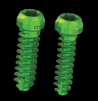
The SI-LUTION® Sacroiliac Joint Fusion System is designed to offer immediate stability and long-term fixation across the sacroiliac (SI) joint. The implants are machined out of Titanium and incorporate the proprietary TRU-LOK® micro-textured surface technology. The cannulated system offers screws in multiple diameters and various lengths with optional static or kinetic stabilization caps to provide an ideal solution for every patient.
Key Features
Manufactured of Titanium with proprietary surface texturing
Large centralized helical fenestrations allow for direct allograft integration
Self-harvesting bone channels to harvest and distribute local bone during insertion
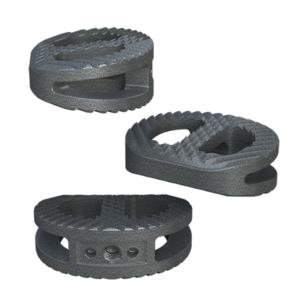
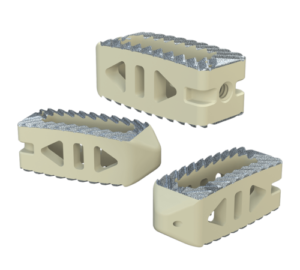
The Savant Anterior Lumbar (ALIF) Interbody Fusion System features three footprints in various heights and lordotic angles offering an ideal fit for every patient.
System Features
Manufactured of Titanium Featuring TRU-LOK®
Open Architecture
Micro-roughness surface texturing produces superior implant contact
Comprehensive discectomy instruments
Three Footprints (mm): 30W x 24D, 35W x 26D, 40W x 28D
8 – 20mm, offered in 2mm increments
Lordosis: 6° and 12°
Prodigy MIS
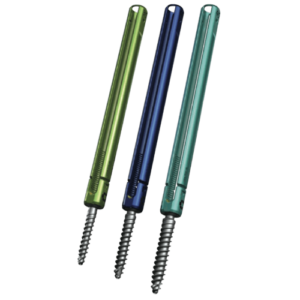
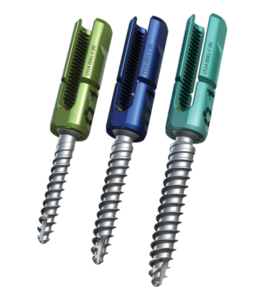
The Prodigy MIS Pedicle Screw System is designed to minimize the complexity of procedural steps while correcting and stabilizing the posterior thoracolumbar spine through a percutaneous approach. This system provides the same strength and rigidity as the Prodigy Polyaxial Screw System.
PEDICLE SCREW SYSTEM
Key Features
Minimized soft tissue disruption
Strong interface between rod and rod inserter
Undercut square thread designed to prevent cross-threading and tulip head splaying
Simple and efficient instruments provide advanced manipulation techniques
Available in 4.5, 5.5, 6.5 and 7.5 Diameter
Heights: 30-55mm in 5mm increments
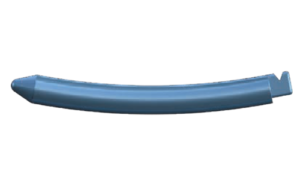
MIS ROD
Key Features
Bulleted tip to facilitate placement
Robust instrument engagement feature
PRODIGY™
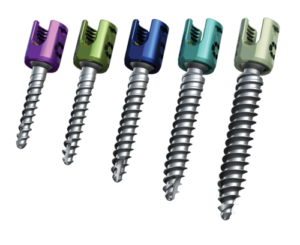
The Prodigy Polyaxial Pedicle Screw System is a posterior spinal fixation system designed to enhance the surgical experience by providing surgeons with its comprehensive implant offering and ergonomically designed instrumentation. The low-profile, friction fit design is offered in both standard and reduction geometries.
PRODIGY PEDICLE SCREW SYSTEM
Key Features
Self-tapping double lead bone screw threads
Continuous friction to maintain tulip position
Optimized instrument ports
Streamlined rod capture
Square thread designed to prevent cross-threading
Available in standard and dual-thread cortico-cancellous options
4.5 – 10.5mm diameter
Height: 25mm – 110mm lengths
5.5mm pre-bent or straight rod available
PRODIGY REDUCTION PEDICLE SCREWS
Key Features
Self-tapping double lead bone screw threads
Continuous friction to maintain tulip position
Optimized instrument ports
Streamlined rod capture
Square thread designed to prevent cross-threading
Extended tulip height of 23.5mm
26mm of threads
Reduction screws offered in 5.5 – 7.5mm in 25mm – 55mm lengths
5.5mm pre-bent or straight rod available
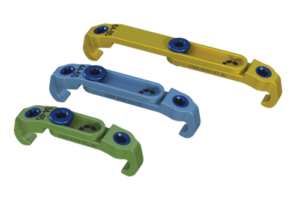
VARIABLE CROSSLINKS
Key Features
Versatile crosslink design with adjustable lengths and angle variability
Slim profile design
Center and lateral set screw features the same T20 hexalobe drive
64-85mm (Gold)
44-65mm (Light Blue)
34-45mm (Green)
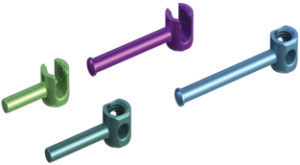
OFFSET CONNECTORS
Key Features
20, 25 and 30 open and closed Offset Connectors
Connects to a Ø5.5mm rod
Accepts the same set screw as the pedicle screws
Flanged and smooth options
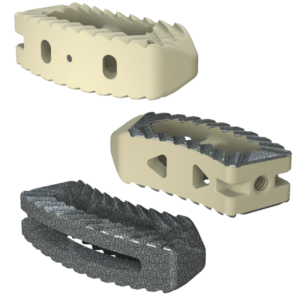
Savant TLIF
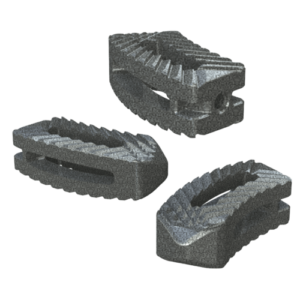
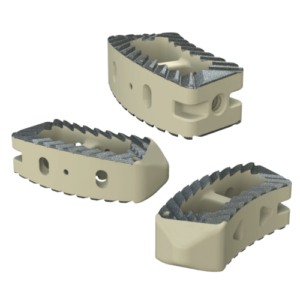
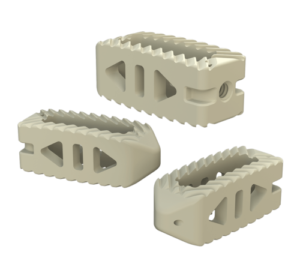
The Savant Transforaminal Lumbar (TLIF) Interbody Fusion System is offered in three different material types, multiple footprints, heights, and lordosis providing multiple options for the surgeon. The convex design offers a more accurate fit to the patient’s anatomy and offers oversized, central lateral graft windows for biologic seeding. The Savant Interbody Fusion System offers Comprehensive discectomy instruments and features instrumentation that allows for better control and more precise implant placement.
SAVANT PEEK TLIF
Key Features
Manufactured of biocompatible PEEK polymer
Strategically positioned tantalum radiopaque markers to optimize visibility and placement
Angled lateral windows on anterior side of implant to retain bone graft material
Large back surface area for increased instrument interface
Footprints (mm): 28L x 9W, 28L x 11W, 32L x 9W and 32L x 11W
Heights: 6 – 16mm, offered in 1mm increments
Lordosis: 0° or 8º
SAVANT TITANIUM TLIF
Key Features
Manufactured of Titanium Featuring TRU-LOK®
Open Architecture
Designed to offer immediate stability and long-term fixation
Micro-roughness surface texturing produces superior implant contact
Footprints (mm): 28L x 9W, 28L x 11W, 32L x 9W and 32L x 11W
Heights: 6 – 16mm, offered in 1mm increments
Lordosis: 0° or 8°
SAVANT TITANIUM PLASMA COATED TLIF
Key Features
Manufactured of PEEK with a titanium plasma spray coating
Footprints (mm): 28L x 9W, 28L x 11W, 32L x 9W and 32L x 11W
Heights: 6 – 16mm, offered in 1mm increments
Lordosis: 0° or 8º
Savant PLIF
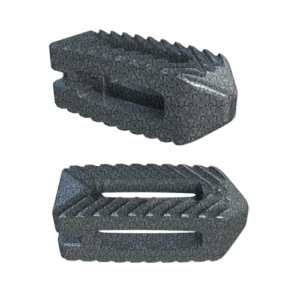
The Savant Posterior Lumbar (PLIF) Interbody Fusion System self-distracting, bulleted tip is offered in three different material types, multiple footprints, heights, and lordosis providing multiple options for the surgeon. The Savant PLIF Interbody Fusion System features instruments that are simple and intuitive to use.
SAVANT PEEK PLIF
Key Features
Manufactured of biocompatible PEEK polymer
Strategically positioned tantalum radiopaque markers to optimize visibility and placement
Multi-directional teeth resist migration
Footprints (mm): 22L x 10W, 26L x 10W and 30L x 10W
Heights: 6 – 16mm, offered in 1mm increments
Lordosis: 0° and 8
SAVANT TITANIUM PLIF
Key Features
Manufactured of Titanium Featuring TRU-LOK®
Open Architecture
Micro-roughness surface texturing produces superior implant contact
Footprints (mm): 22L x 10W, 26L x 10W and 30L x 10W
Heights: 6 – 16mm, offered in 1mm increments
Lordosis: 0° or 8°
SAVANT TITANIUM PLASMA COATED PLIF
Key Features
Manufactured of PEEK with a titanium plasma spray coating
Optimal Radiolucency
Increased surface topography
Footprints (mm): 22L x 10W, 26L x 10W and 30L x 10W
Heights: 6 – 16mm, offered in 1mm increments
Lordosis: 0° and 8°
Aptitude
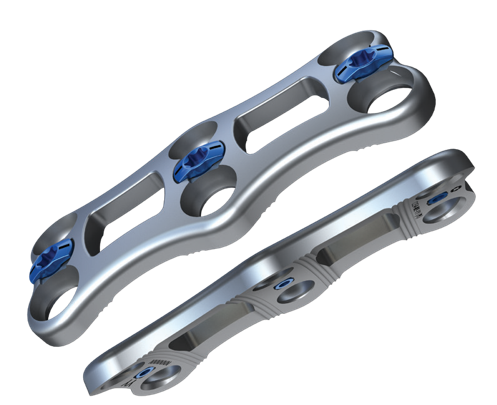
The Aptitude Cervical Plates feature a slim profile design allowing for a smooth anterior service. The simple and intuitive one-step locking mechanism facilitates complete control by the surgeon during the procedure. The Aptitude system offers streamlined instrumentation to accommodate the needs of the patients and surgeons.
ANTERIOR CERVICAL PLATES
Key Features
Low-profile Plate
Large Graft Window
Simple and effective, one-step locking mechanism
Pre-Lordosed to match patient anatomy
1-5 level plates
17mm plate width
2.2mm thick
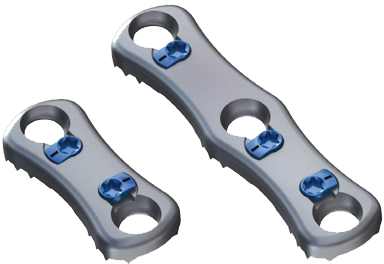
ANTERIOR MIDLINE CERVICAL PLATES
Key Features
Small incision, minimizing lateral retraction
Narrow width optimizes post-operative visualization of the fusion site
Posterior cleats resist slippage and increase torsional stability
1-2 level plates
10.5mm plate width
2.2mm thick
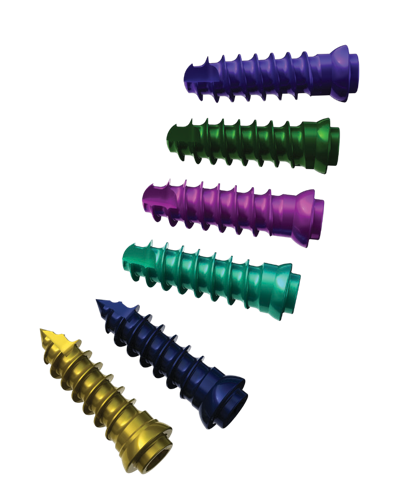
APTITUDE SCREWS
Key Features
Ø4.0 and Ø4.5 in 12-18mm lengths (in 2mm increments)
Self-Drilling, Self-Tapping, Fixed and Variable Screws
Color-coded screws allow for easy identification
Same screws used for both Standard and Midline plates
Sage
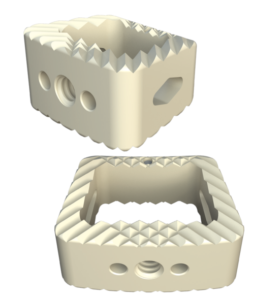
The Sage Cervical Interbody Fusion System is designed to support cervical loads while maximizing surface between the implant and vertebral bodies. The Interbody is offered in four footprints to accommodate individual patient anatomy while the streamlined instrumentation is designed to aid in consistent and accurate implant placement.
SAGE PEEK CERVICAL
Key Features
Manufactured of biocompatible PEEK polymer
Tantalum radiopaque markers to optimize visibility and placement
Multi-directional aggressive teeth designed to prevent implant migration
Large, central graft cavity for packing bone graft
Color-coded instruments for easy identification
Footprints (mm): 12W x 11D, 14W x 12D, 16W x 13D, and 18W x 14D
Heights: 5-12mm, offered in 1mm increments
Lordosis: 7°
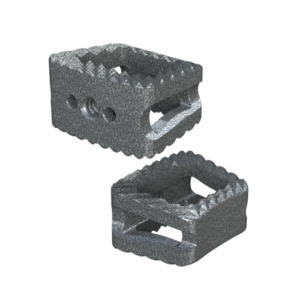
SAGE TITANIUM CERVICAL
Key Features
Manufactured of Titanium with surface texturing
Open Architecture
Micro-roughness surface texturing produces superior implant contact
Designed to ensure a high degree of compressive strength and dimensional stability
Footprints (mm): 12W x 11D, 14W x 12D, 16W x 13D, and 18W x 14D
Heights: 5-12mm, offered in 1mm increments
Lordosis: 7°
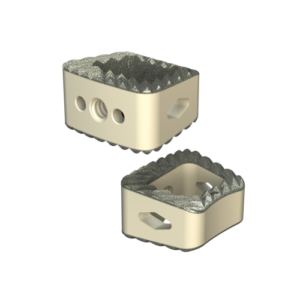
SAGE TITANIUM COATED CERVICAL
Key Features
Manufactured of PEEK with a titanium plasma spray coating
Surface topography produces superior implant contact and construct stability
Optimal Radiolucency
Self-distracting leading edge to facilitate implant insertion
Footprints (mm): 12W x 11D, 14W x 12D, 16W x 13D, and 18W x 14D
Heights: 5-12mm, offered in 1mm increments
Lordosis: 7°
Contact Curiteva
Contact us to learn more about Curiteva’s products and technology





 System Features
 Key Features
 Key Features
 Key Features
 Key Features
 Key Features
 Key Features
 Key Features
 Key Features
 Key Features