| Oil-Free Scroll | Approximately 1.5–10 bar(g) | Approximately 0.1–3 m³/min per package | Dental facilities, laboratories, small medical systems, electronics and light industrial equipment | Class 0 available
Confirm certification for the complete package and outlet conditions. | Low vibration, low noise, compact footprint and simple modular expansion | Lower capacity per unit; scroll tips and valves require scheduled inspection; not ideal for large continuous-duty plants | Check noise level, duty cycle, redundancy arrangement, dew point and availability of replacement scroll components |
| Dry Oil-Free Screw | Approximately 5–13 bar(g) for common industrial configurations | Approximately 1–100 m³/min, depending on frame size and pressure | Food and beverage, pharmaceuticals, textiles, automotive, general manufacturing and process air | Class 0 available
The compression chamber is designed without oil; verify downstream contamination controls. | Suitable for continuous operation, broad capacity range and good plant-level scalability | Higher capital cost than lubricated screw compressors; rotor coatings, coolers and air seals need appropriate maintenance | Request ISO 8573-1 test evidence, full-load and part-load power data, service intervals and coating warranty terms |
| Water-Injected Screw | Approximately 5–13 bar(g) | Approximately 1–30 m³/min, depending on the configuration | Industrial plants requiring oil-free compression with moderate pressure and stable continuous demand | Application-dependent
The compression chamber uses water; confirm water quality, filtration and outlet-air requirements. | Water provides cooling and sealing; may achieve a compact single-stage design at moderate pressure | Requires water-treatment control, water separation and freeze or corrosion protection; not equivalent to a dry screw design in every installation | Evaluate water consumption, water-treatment specification, drain design, ambient-temperature limits and service support |
| Oil-Free Reciprocating | Approximately 7–30 bar(g), with higher pressure available in multi-stage designs | Approximately 0.05–5 m³/min | High-pressure laboratory air, PET preforms, gas boosting, instrumentation and small intermittent systems | Class 0 available
Verify piston-ring material, filtration and package-level test results. | Efficient at smaller flows, capable of relatively high pressure and suitable for intermittent demand | More pulsation and vibration than rotary machines; noise and wear can increase with frequent cycling | Check receiver sizing, pulsation control, piston-ring life, maintenance kits and maximum starts per hour |
| Oil-Free Centrifugal | Approximately 2–10 bar(g) for common multi-stage plant-air systems | Approximately 20–1,000+ m³/min | Large continuous-demand plants, steel, chemicals, automotive, utilities and large process-air networks | Class 0 available
Confirm the complete air-treatment train and operating envelope. | High flow, low mechanical contact in the compression path and strong suitability for continuous base-load operation | Performance is sensitive to flow and inlet conditions; surge control, installation quality and specialist service are important | Compare turndown range, surge protection, inlet-filter pressure loss, minimum stable flow and commissioning support |
| Global Supplier and Model Evaluation Criteria |
| Air Purity Documentation | Required evidence | Request a current ISO 8573-1 Class 0 certificate or independent test report that identifies the tested model, operating conditions, sampling method and test laboratory. Do not rely only on the phrase “oil-free.” |
| Energy Performance | Compare like for like | Compare specific power in kW per m³/min at the same pressure, inlet condition, cooling method and measurement boundary. Ask for full-load, part-load and unloaded-power data rather than motor rating alone. |
| Operating Environment | Installation suitability | Confirm allowable ambient temperature, altitude correction, humidity, cooling-water conditions, enclosure rating, ventilation requirements and cold-start limitations for the destination country. |
| Lifecycle Support | Long-term availability | Evaluate local technicians, spare-parts lead time, preventive-maintenance intervals, remote diagnostics, warranty coverage, training and the total cost of ownership over the planned service life. |
| Commercial Comparison | Total delivered cost | Compare equipment price, freight, import duties, commissioning, air treatment, receiver capacity, installation, validation testing, consumables, service contracts and expected energy cost. |
| Model Selection Rule | Recommended approach | Select the compressor based on measured flow demand, required pressure, air-quality class, duty profile and site conditions. Use a properly sized receiver and consider N+1 redundancy where compressed air is critical to production or safety. |




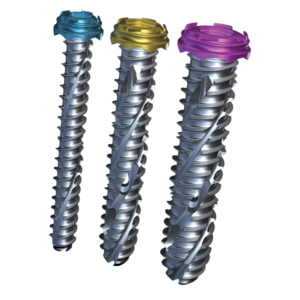

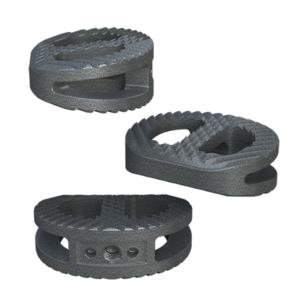 System Features
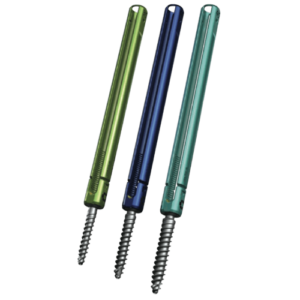 Key Features
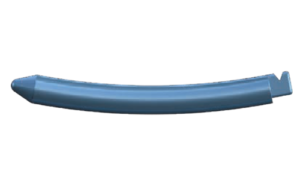 Key Features
 Key Features
 Key Features
 Key Features
 Key Features
 Key Features
 Key Features
 Key Features