| Product category | Rechargeable wearable neck fan with dual side airflow and an integrated lithium-ion battery pack. | Confirm that the sample, production unit, battery pack, charger input and user manual describe the same configuration. | The standard covers portable sealed secondary lithium cells and batteries used in portable applications. |
| Battery capacity | Target: 4,000 mAh rated capacity at the declared test condition. | Request a capacity test report and compare the measured result with the declared rating; do not rely only on packaging text. | IEC 62133-2 addresses battery safety; it does not prescribe a 4,000 mAh capacity. |
| Nominal battery voltage | Approximately 3.7 V for a single-cell lithium-ion or lithium-polymer battery configuration. | Check the battery label, protection-board design, charger specification and test report for consistency. | Voltage and cell configuration affect the applicable battery test setup and electrical safety assessment. |
| Nominal energy | Approximately 14.8 Wh, calculated as 3.7 V × 4.0 Ah. | Verify the calculation against the rated voltage and rated capacity printed on the battery or product label. | Energy rating supports transport, labeling and product documentation decisions but is not an IEC 62133-2 pass/fail value by itself. |
| Battery chemistry | Rechargeable lithium-ion or lithium-polymer chemistry with documented cell specifications. | Obtain the cell specification sheet, production-batch identification and material traceability records. | The cell and battery construction must match the configuration evaluated in the safety documentation. |
| Charging interface | USB Type-C input, typically 5 V DC; specify the maximum charging current in the product specification. | Check charging-current labeling, cable compatibility, charge termination and abnormal-charging protection. | Charging conditions are relevant to electrical safety and overcharge-related evaluation. |
| Battery protection circuit | Protection against overcharge, over-discharge, overcurrent and external short circuit; temperature monitoring is strongly preferred. | Request the protection-circuit schematic or specification and verify cutoff behavior through sample testing. | Protection functions support safe operation during electrical abuse and fault conditions assessed by the standard. |
| Required safety evidence | A current laboratory test report identifying the exact cell or battery model, configuration and tested sample. | Confirm report number, issue date, laboratory competence, tested model, cell arrangement and production similarity. | A generic report for a different battery model should not be treated as evidence for the offered neck fan. |
| Core electrical safety checks | Require documented evaluation for continuous charging, external short circuit, overcharge, forced discharge and abnormal charging conditions where applicable. | Review test conditions, acceptance criteria, observed results and sample identification rather than checking only a certificate title. | These are representative electrical abuse areas covered within IEC 62133-2 safety evaluation. |
| Mechanical safety checks | Require evidence covering vibration, mechanical shock, compression or impact-related conditions applicable to the battery design. | Ensure the battery enclosure, wiring and protection board are unchanged from the tested construction. | Mechanical abuse testing helps assess whether the battery remains safe after foreseeable physical stress. |
| Thermal safety | Use cells with documented operating limits and include temperature monitoring or thermal cutoff in the battery-management design. | Check charging and discharging temperature behavior during pre-shipment inspection and sample validation. | Thermal exposure and abnormal-use conditions are important parts of lithium-battery safety assessment. |
| Runtime declaration | Publish runtime by fan-speed level, for example low, medium and high, instead of using one universal runtime figure. | Use a controlled test with a fully charged battery, defined ambient temperature, fan speed and cutoff voltage. | Runtime is a performance measure and is separate from IEC 62133-2 conformity. |
| Airflow and user comfort | Specify airflow level, noise level, neck-contact temperature, balance, exposed moving parts and skin-contact materials. | Conduct wear trials and measure noise and surface temperature at each operating level. | These are product-use requirements; they do not replace battery-safety testing. |
| Product weight and dimensions | Set a practical target of approximately 250–400 g and require final dimensions before mass production. | Measure the finished product with the installed battery and compare it with the approved sample. | Weight and dimensions are commercial specifications, not IEC 62133-2 requirements. |
| Labeling and user instructions | Include rated voltage, capacity, energy, charging input, battery warnings, disposal instructions and operating limitations. | Check that the label and manual match the tested battery configuration and target-market requirements. | Clear instructions and identification support safe use and traceability of the tested battery. |
| Production consistency | Freeze the approved cell model, battery pack, protection board, charger circuit, housing and firmware before volume production. | Use lot sampling for capacity, charging, insulation, cutoff protection, appearance and functional operation. | Safety evidence is meaningful only when mass-produced units remain technically equivalent to tested samples. |
| Wholesale purchasing gate | Approve the order only after document review, sample testing, battery traceability confirmation and a written change-control requirement. | Make unapproved battery, cell, charger or protection-board substitutions a nonconformity requiring buyer approval. | IEC 62133-2 evidence should be treated as configuration-specific, not as a blanket approval for every future version. |






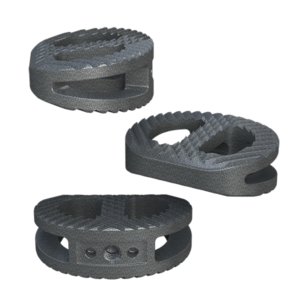 System Features
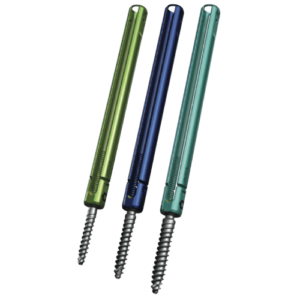 Key Features
 Key Features
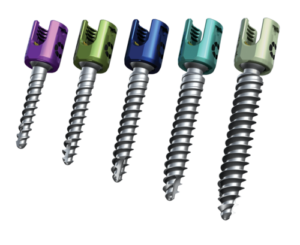 Key Features
 Key Features
 Key Features
 Key Features
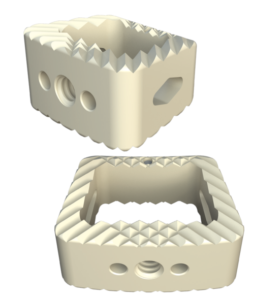 Key Features
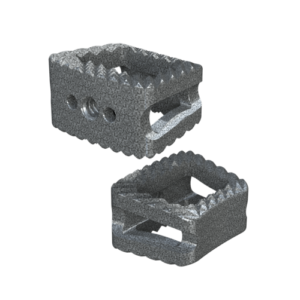 Key Features
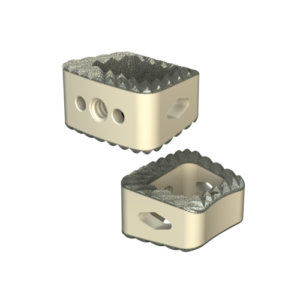 Key Features