What is a Dental Hand Drill and How Does It Work?

The Dental Hand Drill is a crucial tool in modern dentistry, shaping the way dental professionals perform procedures. According to the American Dental Association, over 2.3 million root canals are performed annually, often requiring precise drilling techniques. The efficiency of the Dental Hand Drill greatly influences patient outcomes and comfort levels during treatment.

Dr. Emily Fischer, a leading dental researcher, emphasizes, “The right dental tools can enhance the precision of every procedure.” This highlights the importance of advancements in design and technology. In recent years, innovations have focused on ergonomics and noise reduction, making procedures less intimidating for patients.

Despite the benefits, some practitioners find adapting to new models challenging. Many still rely on traditional drills, leading to a gap in effectiveness. Continued education about the latest, innovative Dental Hand Drills is vital for improving dental care quality. Hence, understanding this tool's mechanics and advancements is essential for any dental professional.

What is a Dental Hand Drill and How Does It Work?

Definition and Purpose of a Dental Hand Drill

A dental hand drill is a vital tool in dentistry. It serves to remove decay and prepare teeth for fillings. This handheld device allows for greater precision than some powered tools. Dentists often use it to access hard-to-reach areas in the mouth. Its design provides control, which is crucial during delicate procedures.

The primary purpose of a dental hand drill is to ensure that cavities are thoroughly cleaned. A well-executed procedure reduces the risk of infection. However, using this tool requires skill and training. Without proper technique, there could be discomfort for the patient. Sometimes, practitioners might rush through the process, leading to incomplete work.

Dental hand drills come with different attachments. These can vary based on the specific task at hand. The versatility of this tool is impressive but should be approached carefully. Inexperienced use can result in damaged teeth or over-preparation. Continuous learning and practice are essential for achieving optimal results.

Components of a Dental Hand Drill

Dental hand drills are essential tools in modern dentistry, designed for precision and efficiency. The main components of a dental hand drill include the handpiece, burrs, and the power source. The handpiece is the part the dentist holds. It is engineered for comfort and control, allowing for dexterous movements during procedures.

Burrs are the cutting instruments that attach to the handpiece. They come in various shapes and sizes, tailored for different tasks, such as cavity preparation or enamel shaping. Data from the American Dental Association indicates that using the correct burr can reduce procedural time by up to 30%. The power source, often an electric motor, provides the necessary speed and torque for effective cutting. Studies show that electric handpieces can operate at speeds exceeding 100,000 RPM, ensuring efficient treatment.

Despite advancements, challenges remain. The weight of the handpiece can sometimes lead to fatigue for dental professionals. Moreover, improper burr selection may result in inadequate cavity preparation, impacting treatment outcomes. Continuous training and education are vital for dentists to stay updated on the latest tools and techniques, ensuring they maximize their equipment's potential.

Dental Hand Drill Components and Their Usage

Mechanism of Operation: How a Dental Hand Drill Works

A dental hand drill, often used by dentists, plays a crucial role in routine procedures. It functions as a compact tool designed to remove decay and prepare teeth for treatment. Understanding how it works reveals the intricate technology behind dental care.

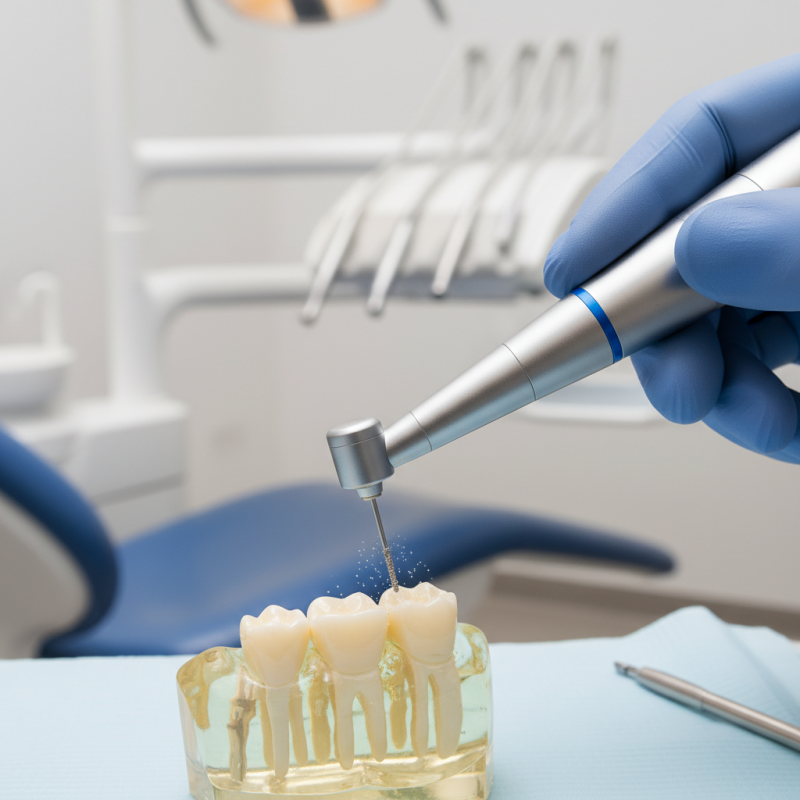
The mechanism of a dental hand drill primarily revolves around a rotating dental burr. This burr is a small, cutting tool made of durable materials. When activated, the burr spins rapidly, allowing it to efficiently cut through the enamel and dentin. It creates minimal vibration, which helps maintain patient comfort. Additionally, dentists adjust the drill's speed based on the specific procedure and the patient's needs.

While the technology is effective, it's not without challenges. Some patients may experience anxiety at the sound of the drill, even if it's working efficiently. Precision is critical, requiring the dentist's skill to avoid damaging healthy tissue. Each procedure demands a balance between speed and accuracy. This aspect of dental work often requires ongoing training and practice to master. Understanding the drill’s operation illuminates its significance in dental health.

Safety Considerations in Using Dental Hand Drills

Dental hand drills are essential tools in dentistry, but safety considerations during their use cannot be overlooked. According to the American Dental Association, nearly 50% of dental injuries stem from inadequate equipment handling. Dentists must ensure that their hand drills are properly maintained. This includes regular checks for wear and tear, as worn bits can create excess heat and lead to patient discomfort.

In addition, personal protective equipment (PPE) like gloves, masks, and safety glasses are crucial. A study published in the Journal of Dental Research highlighted that effective PPE reduces the risk of cross-contamination by up to 95%. Following strict infection control protocols minimizes potential hazards. Moreover, patients often experience anxiety during dental procedures. Communication is vital. Dentists should explain the drill’s operation to ease fears and foster trust.

Dentists should reflect on their practices. Continuous education on the latest drilling techniques can enhance safety. Many professionals still rely on outdated methods that may compromise patient safety. Regular training in new technology and techniques is vital for modern dental practices. Implementing these safety measures can significantly improve patient outcomes and overall safety in the dental office environment.

Evolution and Advancements in Dental Hand Drill Technology

Dental hand drills have evolved significantly over the years. Initially, these tools were rudimentary, powered by foot pedals. They produced a loud noise and caused discomfort. The design was simple, but effective in its primary function: removing decayed tooth material.

With technological advances, modern dental hand drills are different. They are smaller, quieter, and more efficient. Today’s versions often use air pressure or electric power. They provide a more comfortable experience for patients. The design incorporates advanced materials, ensuring durability and precision. However, these advancements are not without flaws. Some patients still report anxiety related to the dental drill's sound and sensation.

As dental technology continues to progress, there is still room for improvement. Creating a completely painless experience is a goal researchers strive for. Additionally, understanding the psychological impact of dental procedures is crucial. While modern drills are more effective, ongoing development is essential for patient comfort and care.

What is a Dental Hand Drill and How Does It Work? - Evolution and Advancements in Dental Hand Drill Technology

Feature Description Advancements
Type Hand-operated dental drill Introduction of electric drills
History Used since the ancient civilizations for drilling teeth Development of more precise control mechanisms
Mechanism Rotary motion to remove decay Incorporation of laser and ultrasonic technologies
Materials Traditionally metal; modern drills use composite materials Use of biocompatible materials
Noise Level Can be quite noisy Development of quieter designs
Patient Comfort Limited comfort with traditional drills Improved ergonomic designs and dental anxiety management techniques