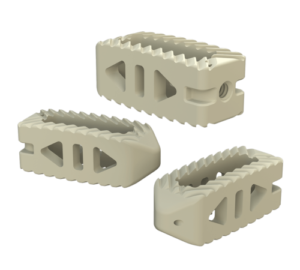
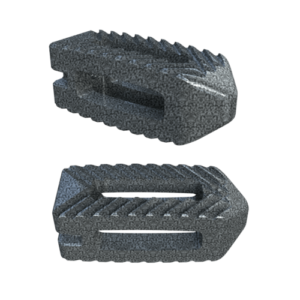
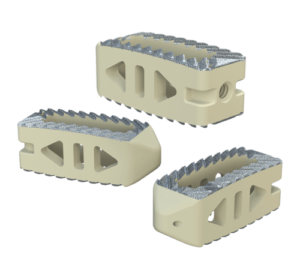
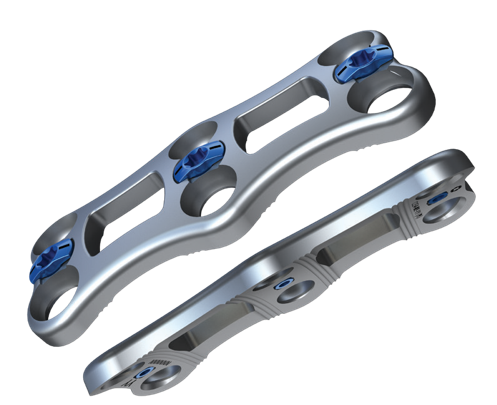
China Top 10 Bone Graft Material Manufacturers?

China’s bone graft material industry has become an important source for hospitals, dental clinics, and orthopedic distributors worldwide. Manufacturers now offer synthetic, xenogeneic, and composite graft options for different clinical requirements. Yet product names alone do not prove quality. Evidence matters.

This guide examines ten leading Chinese manufacturers through practical and verifiable criteria. These include material composition, sterilization methods, production capacity, quality management systems, clinical documentation, and export experience. It also considers whether each company explains handling, storage, packaging, and intended use clearly. Those details matter in real practice. A graft may look suitable in a catalog, but its performance depends on porosity, resorption behavior, particle size, and surgical application.

The selection should not be treated as an absolute ranking. Market data changes, certifications expire, and manufacturers update their product lines. Some companies disclose extensive technical information, while others provide limited public evidence. That gap deserves attention. Buyers should confirm current certificates, batch records, testing reports, and local regulatory requirements before making a decision.

The following overview aims to help professionals compare China’s top 10 bone graft material manufacturers with greater confidence. It combines industry experience, technical considerations, and publicly available information. However, no general list can replace clinical judgment or direct supplier verification. Good decisions require careful questions, not attractive brochures. That is where this comparison begins.

China Top 10 Bone Graft Material Manufacturers?

Bone Graft Materials: Types, Uses, and Clinical Applications in China

Bone graft materials support bone repair when trauma, infection, tumors, or tooth loss creates a structural gap. In China, clinical teams commonly evaluate autografts, allografts, xenografts, and synthetic substitutes. Autografts use the patient’s own bone and provide living cells, but harvesting can cause pain and another surgical wound. Allografts offer useful shape and volume. Their performance depends on processing and biological response.

Synthetic materials include hydroxyapatite, beta-tricalcium phosphate, calcium phosphate cement, and bioactive glass. Surgeons may select them for spinal fusion, dental implantation, fracture reconstruction, or revision procedures. Each material behaves differently. Some provide gradual resorption, while others maintain volume longer. Fit matters. Particle size, porosity, handling, and sterilization can affect surgical performance.

For a China-focused top-10 manufacturer review, buyers should examine clinical evidence, quality systems, traceability, and regulatory documentation rather than marketing claims. Hospitals also assess packaging integrity, shelf life, delivery reliability, and surgeon training. Published studies are valuable, but they may not reflect every patient group or surgical technique. That limitation deserves attention. In practice, a graft that performs well in one hospital may require adjustment elsewhere because of differences in case selection, infection control, and follow-up. Experienced evaluation should combine laboratory data, real-world outcomes, and careful discussion with qualified clinicians.

How China’s Top Bone Graft Material Manufacturers Are Evaluated

China Top 10 Bone Graft Material Manufacturers?

Evaluating China’s leading bone graft material manufacturers requires more than comparing prices. The global bone grafts and substitutes market was valued at about USD 3.5 billion in 2022, according to Grand View Research. Its report also projects steady growth through 2030. This demand increases pressure on suppliers to prove consistency, not merely production capacity.

A serious evaluation starts with regulatory evidence. Buyers should check valid NMPA registration, ISO 13485 certification, controlled cleanroom records, and batch-level traceability. Manufacturing audits should examine raw-material testing, sterilization validation, packaging integrity, and shelf-life studies. ASTM and ISO test results can support claims about compressive strength, porosity, degradation, and biocompatibility. Small details matter. A missing lot record can weaken confidence in an otherwise impressive facility.

Clinical relevance deserves equal attention. Reports from MarketsandMarkets identify dental and orthopedic reconstruction as major application areas, but market growth does not prove clinical superiority. Manufacturers should provide peer-reviewed evidence, post-market surveillance, and transparent adverse-event handling. Technical teams should also review calcium-phosphate composition, particle size, handling time, and storage conditions. In practice, surgeons notice whether granules stay in place or scatter during irrigation. That practical feedback is valuable, though it is not a substitute for controlled studies. Some evaluations still rely too heavily on brochures. That is a weakness worth correcting. Reliable selection combines audited manufacturing, measurable material performance, documented clinical experience, and responsive technical support.

Profiles of China’s Top 10 Bone Graft Material Manufacturers

China’s top ten bone graft material manufacturers reflect a broad and changing biomaterials market. Grand View Research estimates the global bone graft market will grow at about 5.8% annually through 2030. This growth supports stronger Chinese production capacity and clinical research.

The first profile covers manufacturers producing demineralized bone matrix and processed allograft materials. The second focuses on calcium phosphate ceramics, especially porous granules and blocks. Third, hydroxyapatite suppliers target dental and orthopedic filling procedures. Fourth, beta-tricalcium phosphate producers develop injectable substitutes for irregular defects. Fifth, collagen-composite manufacturers combine handling comfort with biological support.

The sixth profile includes bioactive glass specialists. The seventh covers ready-to-use putties designed for controlled operating-room application. Eighth, 3D-printed scaffold manufacturers focus on patient-specific structures. Ninth, dental graft producers emphasize particle size and easy delivery. Tenth, contract manufacturers provide sterile packaging and quality testing. According to Fortune Business Insights, synthetic grafts remain important because they reduce dependence on donor tissue. Still, material performance can vary between laboratory testing and real surgery. That gap deserves more attention. ISO 10993 biocompatibility testing, traceability, sterility validation, and consistent porosity should guide supplier evaluation. No ranking is perfect.

Tips: Compare clinical evidence, not brochure claims. Request batch records, test methods, shelf-life data, and adverse-event reporting. Check whether the manufacturer supports surgeon training and post-market monitoring. A lower unit price may hide weaker documentation or inconsistent handling.

China Top 10 Bone Graft Material Manufacturers? - Profiles of China’s Top 10 Bone Graft Material Manufacturers

Anonymized comparative profiles of major Chinese bone-graft material manufacturing capabilities. Company names and brand information are intentionally omitted.

Rank Anonymized Manufacturer Profile Primary Material Categories Common Product Forms Typical Clinical Applications Manufacturing Strengths Common Quality & Regulatory Frameworks
1 Manufacturer Profile 01 Synthetic ceramics
Hydroxyapatite and beta-tricalcium phosphate
Granules, blocks, porous scaffolds Periodontal defects, dental implantation, orthopedic bone void filling Controlled porosity, sintering technology, particle-size consistency Medical-device quality management; biocompatibility and sterility testing
2 Manufacturer Profile 02 Demineralized bone matrix
Processed allogeneic bone derivatives
Putty, strips, granules, injectable formulations Spinal fusion, trauma reconstruction, orthopedic revision procedures Donor-tissue processing, demineralization control, traceability systems Donor screening, tissue-bank controls, sterility and viral-inactivation validation
3 Manufacturer Profile 03 Collagen-based grafts
Collagen sponges and composite matrices
Membranes, sponges, sheets, molded matrices Guided bone regeneration, wound coverage, dental and maxillofacial surgery Low-temperature processing, collagen purification, flexible shaping Biological safety evaluation, endotoxin control, sterilization validation
4 Manufacturer Profile 04 Porous hydroxyapatite
Calcium-phosphate scaffolds
Blocks, cylinders, custom-shaped implants Maxillofacial reconstruction, cranial repair, dental bone augmentation Open-cell pore architecture, dimensional customization, high-temperature processing Material characterization, mechanical testing, biocompatibility assessment
5 Manufacturer Profile 05 Beta-tricalcium phosphate
Resorbable calcium-phosphate substitutes
Granules, wedges, pastes, injectable fillers Contained bone defects, periodontal surgery, trauma and spinal procedures Resorption-rate control, powder processing, premixed delivery systems Physicochemical testing, sterility assurance, shelf-life verification
6 Manufacturer Profile 06 Biphasic calcium phosphate
Hydroxyapatite and beta-tricalcium phosphate blends
Granules, porous blocks, moldable pastes Dental implant sites, orthopedic defects, alveolar ridge preservation Phase-ratio control, interconnected porosity, adaptable resorption profiles Composition analysis, particulate testing, biological evaluation
7 Manufacturer Profile 07 Xenogeneic graft materials
Deproteinized animal-derived mineral matrices
Granules, blocks, membranes Dental implantology, sinus-floor elevation, periodontal regeneration Deproteinization, inorganic-mineral preservation, particle-size grading Animal-source traceability, pathogen-risk controls, sterilization validation
8 Manufacturer Profile 08 Composite bone substitutes
Calcium phosphate with collagen or polymer phases
Injectable pastes, putties, membranes, granules Minimally invasive defect filling, dental and orthopedic applications Composite formulation, cohesive handling, syringe or applicator delivery Component compatibility testing, sterility, degradation and biocompatibility studies
9 Manufacturer Profile 09 Synthetic polymer composites
Biodegradable polymer-calcium-phosphate systems
3D-printed scaffolds, porous implants, molded implants Personalized reconstruction, complex orthopedic and craniofacial defects Digital design, additive manufacturing, controlled degradation engineering Mechanical performance testing, chemical characterization, biological safety evaluation
10 Manufacturer Profile 10 Specialized graft systems
Putty, injectable and procedure-specific formulations
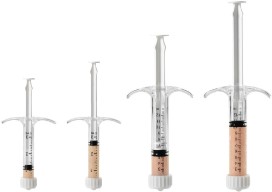
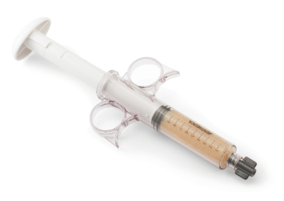
Pre-filled syringes, moldable putty, custom kits Dental chairside procedures, orthopedic filling, revision surgery Ready-to-use packaging, operating-room convenience, formulation stability Packaging integrity, sterility assurance, transport and shelf-life testing

Note: Product availability, regulatory status, indications and manufacturing capabilities may differ by product model and market. The profiles above summarize commonly recognized material and process categories in China’s bone-graft manufacturing sector.

Product Comparison: Materials, Technologies, Certifications, and Services

China Top 10 Bone Graft Material Manufacturers

When comparing China’s top ten bone graft material manufacturers, material selection deserves close attention. Common options include hydroxyapatite, beta-tricalcium phosphate, and composite grafts. Some suppliers also offer animal-derived materials after controlled deproteinization. Each option has different resorption rates, handling properties, and structural strength. Porosity is crucial. A graft with interconnected pores may support fluid movement and tissue integration, but pore size alone does not prove clinical performance.

Manufacturing technology separates experienced suppliers from simple resellers. Review sintering controls, particle-size consistency, freeze-drying processes, and terminal sterilization methods. Ask for batch records, microbial testing, endotoxin results, and shelf-life data. Reliable manufacturers should maintain traceability from raw materials to final packaging. Certifications may include ISO 13485, NMPA registration, CE marking, or other market-specific approvals. These documents must match the exact product model, not just the factory.

Service quality also affects long-term cooperation. Strong suppliers provide technical files, surgical handling instructions, private-label support, and responsive complaint management. Some offer customized granules, blocks, or membranes. However, customization can increase validation time and cost. That detail is easy to overlook. My comparison would also examine audit transparency, sample consistency, and delivery records. Marketing claims can sound convincing, yet independent test reports may reveal wider variation between batches. No single material fits every surgical situation.

China Top 10 Bone Graft Material Manufacturers: Product Comparison

Material-focused comparison of representative clinical resorption windows. The chart excludes company and brand data and is intended to support evaluation of materials, processing technologies, certification systems, and clinical services.

Autografts generally remodel fastest because they contain living bone-forming cells, while xenografts and high-crystallinity hydroxyapatite tend to remain longer as structural scaffolds. β-TCP and biphasic calcium phosphate typically provide more controllable resorption through composition, porosity, sintering, and 3D-printing parameters.

Values show representative clinical ranges in months and may vary with anatomical site, particle size, porosity, crystallinity, vascularization, and patient factors. Relevant evaluation frameworks commonly include ISO 10993 for biological evaluation, ISO 13485 for quality management, ISO 11135 or ISO 11137 for sterilization, and ISO 14155 for clinical investigations.

China’s Bone Graft Industry: Regulations, Innovations, and Market Trends

China’s bone graft industry is moving from volume-led production toward evidence-led manufacturing. The National Bureau of Statistics reported 216.76 million people aged 65 or above in 2023, representing 15.4% of the population. This aging trend increases demand for trauma, spinal, and dental reconstruction materials. Grand View Research estimated the global bone grafts and substitutes market at about USD 3.4 billion in 2023, with steady growth expected through 2030. China remains an important manufacturing and clinical research base.

Regulation is becoming more detailed. Manufacturers must address product classification, clinical evaluation, biological safety, sterilization, and traceability under China’s medical-device framework. Materials such as synthetic ceramics, demineralized bone matrix, and tissue-engineered scaffolds require different evidence strategies. Quality teams should also review ISO 10993 biological testing and applicable Chinese standards. Manufacturing experience matters here. A strong laboratory result may still fail if process controls are weak. That is an uncomfortable but useful reality.

Tips: Buyers should request registration records, sterilization validation, batch-release data, and published clinical evidence. Compare porosity, resorption time, handling strength, and packaging stability. Do not judge suppliers by catalog size alone. Market reports provide direction, not proof of clinical performance. Independent verification remains essential.