China Best PEEK Cervical Cage Supplier for Global Buyers?

Choosing a China-based peek cervical cage supplier requires more than comparing unit prices. It requires evidence.

Global demand for spinal implants continues to expand as aging populations increase degenerative cervical spine disease. Grand View Research’s 2024 spinal implants report places the global market above USD 10 billion, with continued growth expected through the next decade. Fortune Business Insights also identifies cervical interbody fusion devices as a steadily developing segment. However, market definitions differ between reports. Buyers should treat forecasts as indicators, not guarantees.

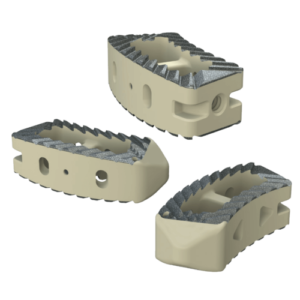
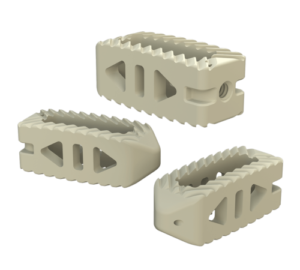
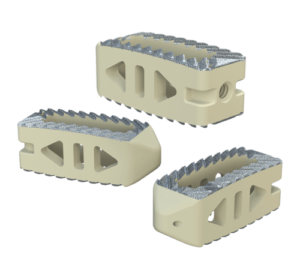
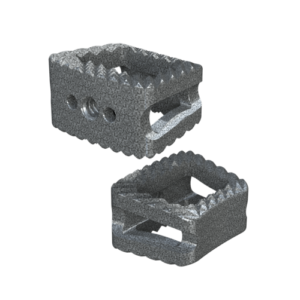
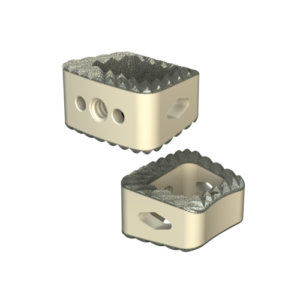
A reliable supplier should demonstrate practical manufacturing experience with medical-grade PEEK, especially ASTM F2026-compliant implant material. Clear documentation should cover resin traceability, machining controls, cleaning, packaging, and sterilization validation. ISO 13485 certification is important, but the certificate alone proves little about daily process discipline. Ask for batch records, dimensional inspection data, and representative samples. Look closely at the implant’s radiolucent body, titanium marker placement, graft window, teeth, and endplate geometry.

Regulatory readiness matters. Depending on the destination, buyers may require FDA 510(k) evidence, EU MDR documentation, or other national registrations. ISO 10993 biological evaluation and validated sterile-barrier packaging should be reviewed early. Supplier websites often sound convincing. Documents matter more.

An experienced partner should also explain design verification, fatigue testing, instrument compatibility, and complaint handling. The right China supplier is not simply the cheapest factory. It is the one that can repeatedly deliver traceable, clinically considered products. Some procurement decisions still rely too heavily on catalogs. That is worth reconsidering.

China Best PEEK Cervical Cage Supplier for Global Buyers?

PEEK Cervical Cages: Definition, Design, and Medical Applications

A PEEK cervical cage is an implant placed between cervical vertebrae after disc removal. It helps restore disc height and supports fusion between adjacent bones. PEEK is radiolucent, so X-rays can show bone growth around the cage clearly. Its elastic behavior is also closer to bone than metal. That matters. However, material selection alone cannot guarantee clinical success.

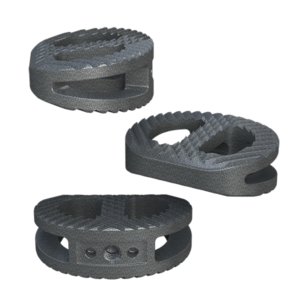
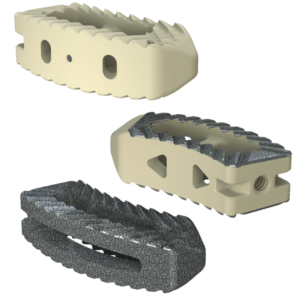
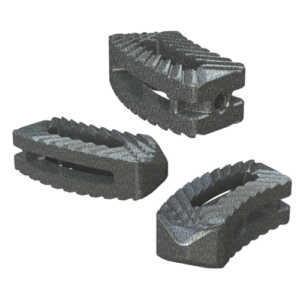
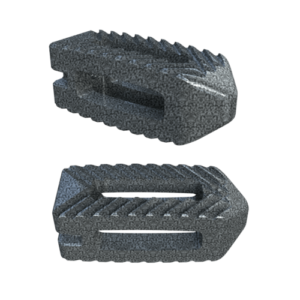
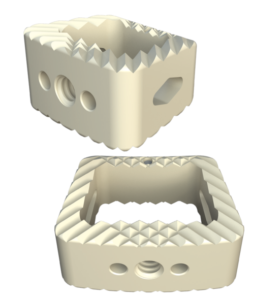
Cage design includes graft windows, serrated teeth, lordotic angles, and multiple footprints. These features help resist migration and match different spinal anatomies. A well-designed cage should provide firm endplate contact without excessive stress concentration. Its internal space must accept bone graft securely. Design is not decorative. Small changes in height or angle can affect alignment, insertion force, and postoperative imaging. No single geometry fits every patient, which is sometimes overlooked during product comparisons.

In anterior cervical discectomy and fusion, surgeons use these cages to maintain foraminal height and support cervical stability. Manufacturing quality requires controlled material grades, precise dimensions, clean processing, and traceable inspection records. A dependable supplier should provide technical files, test data, sterilization information, and clear instructions for use. Samples may look identical. They may not perform identically. Buyers should examine fatigue testing, packaging integrity, and production consistency rather than relying on attractive photographs. A careful review can still miss clinical variables, so surgeon feedback and regulatory assessment remain essential.

China Best PEEK Cervical Cage Supplier for Global Buyers? - PEEK Cervical Cages: Definition, Design, and Medical Applications

Data Dimension PEEK Cervical Cage Information Clinical or Engineering Relevance
Product Definition A spinal interbody implant made primarily from polyether ether ketone (PEEK) and designed for cervical interbody fusion. It maintains disc-space height and supports fusion between adjacent cervical vertebral bodies after disc removal.
Primary Medical Application Anterior cervical discectomy and fusion (ACDF), subject to the surgeon’s indication and applicable regulatory approval. Common treatment goals include neural decompression, restoration of disc height, and stabilization of the operated segment.
Base Polymer Medical-grade PEEK, a high-performance thermoplastic used in implantable medical devices. PEEK offers chemical resistance, sterilization compatibility, and mechanical behavior closer to cortical bone than many metallic alloys.
Radiographic Property PEEK is radiolucent; radiopaque markers are typically incorporated to identify implant position. Reduced imaging artifact can help clinicians evaluate implant placement and postoperative bone formation using X-ray, CT, or MRI.
Elastic Modulus Unfilled PEEK has an elastic modulus of approximately 3.5–4.0 GPa; exact values depend on grade, processing, and test method. Its relatively low stiffness may reduce the risk of stress shielding compared with much stiffer metal implants, although clinical performance depends on the complete construct.
Thermal Characteristics PEEK has a glass-transition temperature of approximately 143°C and a melting temperature of approximately 343°C. Validated molding, machining, cleaning, packaging, and sterilization processes are required for medical-device production.
Endplate Contact Surface The superior and inferior surfaces may include teeth, ridges, serrations, or other anti-migration features. Surface geometry is intended to improve initial stability and resist implant migration while limiting excessive endplate damage.
Central Graft Window Many cage designs include an internal opening for autograft, allograft, or an approved bone-graft substitute. The window allows graft material to contact prepared vertebral endplates and supports the biological fusion process.
Implant Profile Available profiles vary by surgical approach, cervical level, lordotic angle, footprint, and height. A suitable profile should restore alignment and disc height without excessive distraction or overloading of the vertebral endplates.
Lordotic Design Cages may be parallel or manufactured with a fixed lordotic angle; the available angle is product-specific. Angulation can assist restoration of segmental cervical alignment when selected according to patient anatomy and surgical planning.
Fixation Options Cages may be used with an anterior plate and screws or may incorporate an integrated fixation mechanism, depending on the approved design. Fixation strategy affects construct stability, surgical technique, implant profile, and postoperative management.
Radiopaque Markers Markers are commonly made from radiopaque materials such as tantalum or titanium, according to the validated product design. Markers provide reference points for implant depth, orientation, and postoperative radiographic assessment.
Surface Modification Some cages use porous, textured, coated, or additive-manufactured surfaces to improve bone–implant interaction. Surface architecture can influence osseointegration, but performance must be supported by mechanical, biological, and clinical evidence.
MRI Considerations PEEK itself is nonmetallic and generally produces limited MRI artifact; any marker or fixation components must be assessed separately. MRI safety and conditional-use information must come from the device’s validated labeling and testing.
Mechanical Testing Typical evaluation includes static compression, subsidence, expulsion or migration, fatigue, and torsional performance. Testing helps demonstrate that the cage can tolerate expected loads during the intended period of spinal fusion.
Biological Safety The finished device should be evaluated for biocompatibility according to the applicable medical-device risk assessment and standards. Assessment may address cytotoxicity, sensitization, irritation, systemic toxicity, genotoxicity, and material-mediated risks where applicable.
Sterilization The sterilization method depends on the complete device, packaging system, and validated instructions for use; common medical-device methods include ethylene oxide and radiation. Sterility assurance requires validated processing, packaging integrity, and compliance with the target market’s regulatory requirements.
Potential Advantages Radiolucency, relatively bone-like stiffness, design flexibility, and compatibility with graft windows are commonly cited advantages. The actual benefit depends on implant geometry, surgical technique, patient factors, fixation, and the quality of supporting evidence.
Key Risks and Limitations Possible risks include subsidence, migration, nonunion, adjacent-segment symptoms, infection, dysphagia, and neurological or vascular complications. Device selection cannot eliminate surgical risk; indications, contraindications, and warnings must be reviewed by qualified clinicians.
Supplier Evaluation Criteria Review material traceability, design verification, process validation, quality-system certification, sterilization validation, packaging validation, and regulatory documentation. A reliable global sourcing decision should be based on documented compliance and product-specific evidence rather than price or marketing claims alone.
Relevant Quality Frameworks Commonly referenced frameworks include ISO 13485 for medical-device quality management and ISO 10993 for biological evaluation, together with applicable national regulations. The exact requirements vary according to the intended market, device classification, claims, and regulatory pathway.

Note: Dimensions, materials, fixation systems, sterilization methods, indications, and regulatory status are product-specific and must be confirmed through the applicable technical documentation and approved labeling.

Key Material Properties of PEEK for Cervical Spinal Implants

PEEK is widely selected for cervical spinal implants because its properties resemble important clinical requirements. Its density is approximately 1.30 g/cm³, while its elastic modulus commonly ranges from 3.5 to 4.0 GPa. Cortical bone varies widely, often between 7 and 30 GPa. This difference may reduce stress shielding, but it does not eliminate it. Published reviews in the Journal of the Mechanical Behavior of Biomedical Materials report that PEEK’s radiolucency supports clearer postoperative imaging. Surgeons can assess fusion more easily around the cage.

Thermal stability also matters during manufacturing. PEEK has a glass-transition temperature near 143°C and a melting point close to 343°C, according to ASTM F2026 material specifications. It tolerates sterilization better than many conventional polymers. However, repeated processing can still affect molecular weight and mechanical performance.

Small details matter. Supplier quality records should include resin grade, lot traceability, sterilization validation, and dimensional inspection results.

PEEK is chemically stable and generally biocompatible when processed correctly. FDA spinal-system guidance emphasizes mechanical testing, imaging evaluation, and biological safety evidence for implant submissions. Yet plain PEEK may offer limited bone integration. Surface modification, controlled porosity, or appropriate cage geometry may improve the biological response, but each choice creates new testing demands. A reliable China-based supplier should provide test reports aligned with ASTM and ISO methods, not only attractive product photographs. Global buyers should also question fatigue data, marker placement, and long-term cleaning controls. The material is strong, but the complete implant system deserves closer scrutiny.

How to Evaluate a Reliable PEEK Cervical Cage Supplier

How to Evaluate a Reliable PEEK Cervical Cage Supplier

A dependable supplier should provide more than a polished product brochure. Request evidence of ISO 13485 certification, controlled manufacturing records, and complete lot traceability. Each cage should link to raw-material certificates, machining parameters, cleaning records, and sterilization validation. ASTM F2026 confirms implant-grade PEEK requirements, while ASTM F2077 and F2267 support mechanical testing for spinal devices. Ask for actual test reports, not screenshots.

According to Grand View Research’s 2024 PEEK market analysis, the global PEEK market is projected to grow at roughly 9% annually through 2030. This growth increases supplier choices, but not necessarily supplier quality. MarketsandMarkets’ 2024 medical polymers report also identifies implantable applications as an important growth area. That makes technical verification more valuable. Review fatigue strength, subsidence testing, radiolucent marker fixation, and dimensional inspection methods. Small machining errors can affect fit.

Check biological safety evidence under ISO 10993 and confirm whether testing covers the final, sterilized product. Visit the facility if possible. Look for calibrated gauges, separated clean areas, and operators who can explain nonconformance procedures. I would also examine complaint handling and recall history. A fast quotation is not proof of capability. Sometimes, suppliers provide impressive data but weak answers about process changes. That deserves reflection. Request three recent production samples, measure their height and footprint, and compare the results with approved drawings. Reliability is visible in repeated details.

How to Evaluate a Reliable PEEK Cervical Cage Supplier

This evidence-based evaluation framework prioritizes the factors most relevant to cervical cage procurement: regulatory compliance, implant-grade PEEK traceability, mechanical validation, biocompatibility, manufacturing controls, and documentation transparency. Verification should include ISO 13485 quality-system evidence, ISO 10993 biological evaluation, ASTM F2026 implant-grade PEEK documentation, ASTM F2077 mechanical testing, ASTM F2267 subsidence testing, and ISO 14630 implant requirements where applicable.

Manufacturing Standards, Quality Control, and Regulatory Compliance

China Best PEEK Cervical Cage Supplier for Global Buyers?

A reliable PEEK cervical cage supplier should demonstrate more than attractive pricing. Manufacturing should follow a documented quality system, commonly aligned with ISO 13485. Material certificates should confirm implant-grade PEEK, resin identity, and batch traceability. Production records should connect each cage to its raw material, machine, operator, and inspection results.

Quality control needs practical evidence. Inspectors may verify pore geometry, implant height, footprint, surface finish, and radiographic marker placement. Coordinate measuring machines can support dimensional checks. Visual inspection should detect burrs, contamination, and molding defects. Process validation matters when machining, cleaning, packaging, or sterilization is involved. Biocompatibility and shelf-life evidence should match the final device configuration. Some suppliers present polished documents but weak shop-floor controls. That gap deserves careful questioning.

Tips: Request recent inspection samples, not only certificates. Review nonconformance records and corrective actions. Confirm whether products are sterile or non-sterile. Check packaging validation for transport conditions. Ask how design changes are approved and communicated. Regulatory files should support the intended market, such as FDA requirements, EU MDR expectations, or local registration rules. A capable supplier will explain limitations clearly, because compliance is not transferable between countries. Even experienced buyers can miss small differences in product configuration. A second technical review is worthwhile.

Global Purchasing Factors: Customization, Delivery, and Support

China Best PEEK Cervical Cage Supplier for Global Buyers?

Global buyers should assess more than unit price when selecting a PEEK cervical cage supplier. Customization must begin with clinical and engineering requirements, not only a drawing file. Confirm available cage heights, lordotic angles, footprints, marker options, and surface designs. A capable supplier should explain tolerance limits and manufacturing risks clearly. That honesty matters.

Ask for material certificates, inspection records, and batch traceability. Sample approval should include dimensional checks, packaging review, and document verification. For custom designs, request a controlled prototype process before placing a large order. Small details matter. A 0.2 mm variation can affect assembly or surgical handling. However, customization is not always an improvement. Extra features may increase cost, delay validation, or complicate local registration. This deserves careful review.

Delivery reliability depends on more than production capacity. Buyers should confirm lead times for samples, tooling, routine orders, and replacements. Clear shipping terms and protective packaging reduce avoidable surprises. Support should continue after shipment through responsive technical communication, complaint handling, and document updates. Time-zone coverage helps, but practical answers matter more. An experienced supplier can provide inspection photos, packing lists, and corrective-action reports when needed. Still, buyers should verify every claim independently through audits, references, and trial orders. Supplier selection is rarely perfect on the first attempt. The process should leave room for learning.