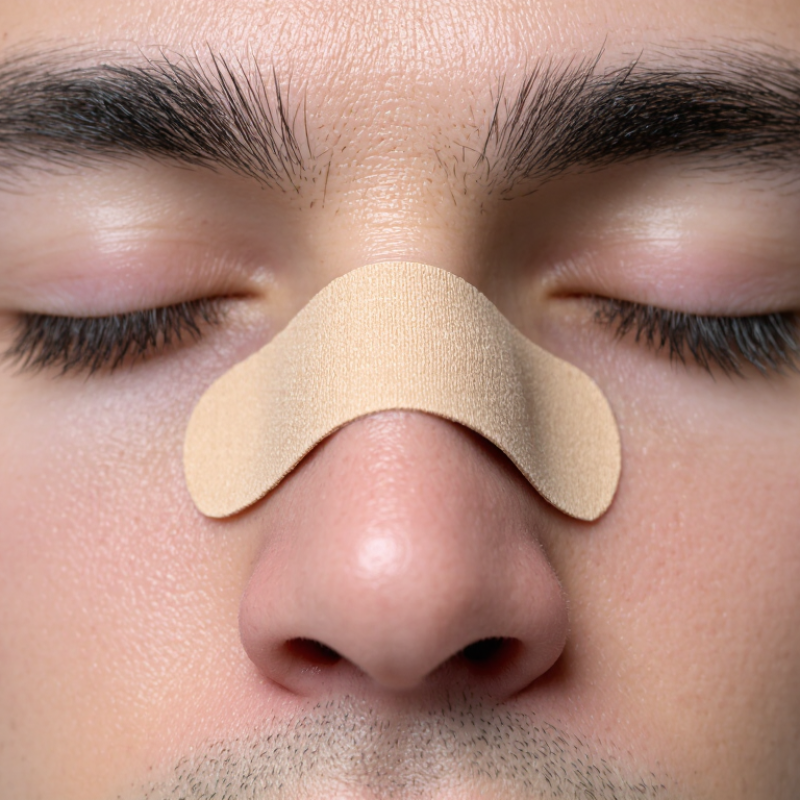
| Basic construction | A nose strip is an external adhesive strip with a flexible spring-like element that gently lifts the sides of the nose. | Common layers include a backing material, pressure-sensitive adhesive, and a flexible plastic or polymer support. | The strip works outside the nose and does not remove internal nasal blockage or treat the underlying cause of congestion. |
| Primary mechanism | Mechanical tension pulls the lateral nasal walls outward, which may increase the feeling of airflow through the front of the nose. | The effect is immediate while the strip remains correctly positioned and adhered. | Improved airflow sensation does not prove that oxygen levels, sleep quality, or snoring will improve for every user. |
| Adhesive category | Pressure-sensitive adhesives bond when light pressure is applied and generally do not require heat or liquid activation. | Medical and consumer skin-contact products may use acrylic-based, rubber-based, or silicone-based adhesive systems. | The exact adhesive and ingredient list should be checked when the user has a history of contact dermatitis or adhesive sensitivity. |
| Hypoallergenic claim | “Hypoallergenic” generally indicates that the product is formulated to reduce the likelihood of allergic reactions; it does not mean zero risk. | No universal global testing method or legal definition makes the term identical across all products and regions. | Review the full materials and adhesive disclosure rather than relying on the hypoallergenic label alone. |
| Common irritation triggers | Irritation may result from adhesive ingredients, friction, occlusion, sweat, oil, or repeated removal. | Possible symptoms include redness, itching, burning, tenderness, scaling, or small areas of skin peeling. | Do not apply over irritated, sunburned, broken, freshly exfoliated, or inflamed skin. |
| Skin patch test | A small-area test can identify obvious local irritation before use on the nose. | Place a small portion on clean, intact skin away from the eyes and monitor during use and for approximately 24 hours afterward. | A home test cannot reliably rule out delayed allergy or guarantee that a full-size application will be tolerated. |
| Professional allergy evaluation | Dermatologists may use standardized patch testing to investigate suspected allergic contact dermatitis. | Testing commonly involves controlled exposure to selected allergens with readings performed at scheduled intervals. | Seek medical advice for recurring reactions, blistering, swelling, or symptoms that continue after the strip is removed. |
| Skin preparation | Clean, dry skin provides more consistent contact between the adhesive and the nose. | Avoid moisturizer, facial oil, sunscreen residue, and heavy perspiration immediately before application unless the instructions state otherwise. | Do not use alcohol, harsh scrubs, or aggressive degreasers to prepare the skin because they may increase irritation. |
| Application location | The strip should sit across the upper or middle portion of the nose according to the product instructions. | It should not cover the nostril openings internally or be placed directly over cuts, rashes, or damaged skin. | Incorrect placement can reduce the mechanical effect and may increase pressure or skin discomfort. |
| Removal technique | Slow, controlled removal reduces sudden traction on the outer skin layer. | Gently loosen one end and peel the strip back over itself rather than pulling sharply upward. | Warm water or a suitable skin-safe oil may help soften residue, provided the product instructions permit it. |
| Wear duration | Longer wear increases the time that the skin is exposed to adhesive, pressure, moisture, and friction. | Follow the package directions; many consumer strips are intended for a single use and overnight wear rather than continuous use. | Do not extend wear beyond the stated limit or reapply a used strip to the skin. |
| Removal limits | There is no universal safe maximum duration for every adhesive strip, skin type, climate, or age group. | The manufacturer’s stated wear time should be treated as the upper limit unless a healthcare professional provides different advice. | Remove immediately if there is significant burning, pain, swelling, itching, blistering, or difficulty breathing. |
| Repeated use | Repeated application to the same area can increase cumulative friction and the chance of irritation or adhesive sensitization. | Allow the skin to recover if redness or tenderness appears, and avoid applying a new strip over a reaction. | Persistent or recurring reactions warrant professional assessment before further use. |
| Sensitive populations | Children, older adults, and people with eczema or very fragile skin may be more vulnerable to skin damage. | Use only when the product labeling is appropriate for the person’s age and condition. | Ask a healthcare professional before use on infants, very young children, or compromised skin. |
| Important limitation | Nose strips provide temporary external support and are not a substitute for diagnosis or treatment of chronic nasal obstruction. | Persistent congestion, repeated nosebleeds, facial pain, suspected sleep apnea, or breathing difficulty should be medically evaluated. | Stop use and seek appropriate care if symptoms are severe, worsening, or unrelated to simple temporary nasal stuffiness. |




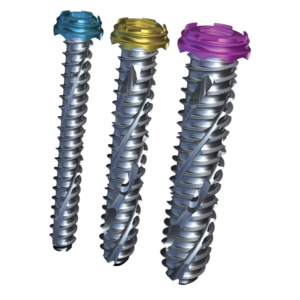

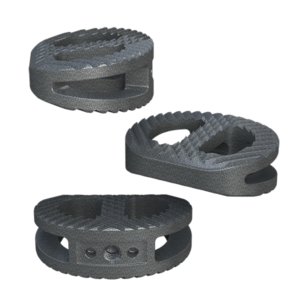 System Features
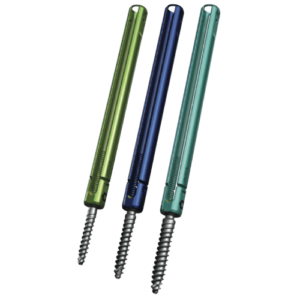 Key Features
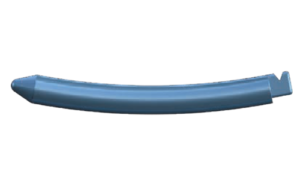 Key Features
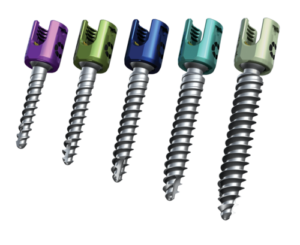 Key Features
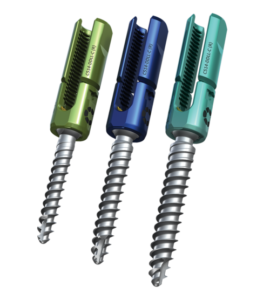 Key Features
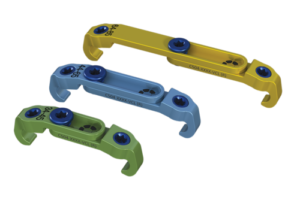 Key Features
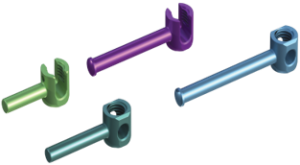 Key Features
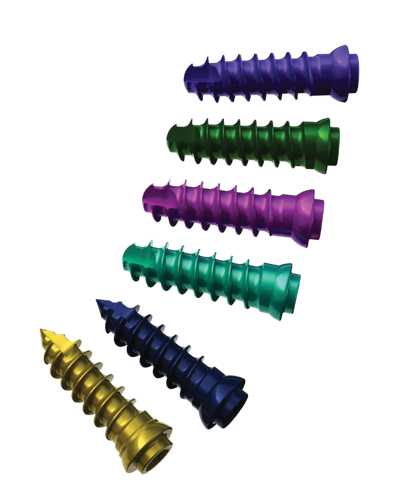
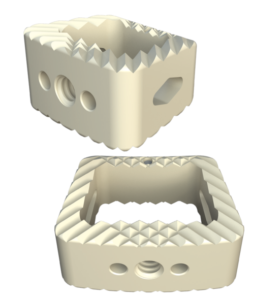 Key Features
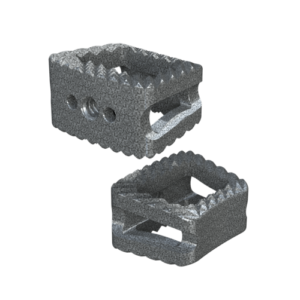 Key Features
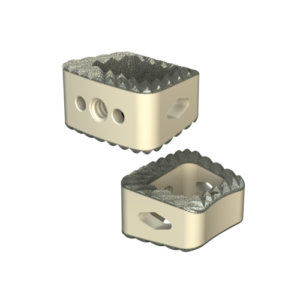 Key Features