| Profile 1: High-Power Fiber-Coupled Specialist | 30–200 W continuous-wave per module; higher power available through stacked or combined modules. | Fiber-coupled modules, multi-emitter packages, and pump assemblies. | Center wavelength commonly specified at 808 nm with a typical tolerance of approximately ±3–5 nm, depending on product class. | Conductive-cooled or water-cooled plates; thermal resistance is normally specified in the technical datasheet. | Industrial heating, solid-state laser pumping, medical systems, and high-throughput illumination. | Burn-in testing, optical power screening, wavelength verification, and environmental testing are commonly expected. | High
Strong engineering customization and integration support. |
| Profile 2: Medical Diode Module Specialist | 1–30 W continuous-wave or pulsed output per handpiece or treatment module. | Compact diode modules, handpieces, and integrated treatment heads. | 808 nm nominal wavelength; spectral tolerance and temperature shift should be confirmed for each model. | Integrated heat spreaders, fans, thermoelectric cooling, or water-assisted cooling depending on power level. | Hair reduction, photobiomodulation, therapeutic systems, and other regulated equipment. | Traceable calibration, electrical safety testing, optical safety controls, and production records are important. | High
Usually provides documentation and regulatory-development assistance. |
| Profile 3: Industrial Bar and Stack Supplier | 40–150 W per bar; stacked assemblies can reach several hundred watts. | Laser bars, vertical stacks, and conduction-cooled arrays. | 808 nm product families commonly use broad-area emitters with application-dependent spectral bandwidth. | Water-cooled microchannel plates or robust conduction-cooled heat sinks. | Materials processing, pumping, thermal treatment, and industrial illumination. | Emitter uniformity, bar-to-bar matching, lifetime testing, and solder-joint inspection are key checks. | High
Well suited to volume projects requiring mechanical and thermal customization. |
| Profile 4: OEM Component Manufacturer | 200 mW–20 W for single emitters and compact subassemblies. | TO-can packages, butterfly packages, submounts, and OEM diode modules. | Nominal 808 nm selection with package-specific wavelength and temperature specifications. | Passive heat sinking for lower power; TEC or active cooling for stabilized modules. | Instrumentation, sensing, compact medical equipment, and laboratory systems. | Incoming material control, automated optical testing, and lot traceability are typical requirements. | High
Good for repeat orders, design-in work, and private-label integration. |
| Profile 5: Research and Laboratory Supplier | 50 mW–10 W, often with adjustable current or temperature control. | Benchtop modules, fiber-coupled sources, and diode-driver packages. | Often offers tighter selection options and measured wavelength data for individual units. | Air-cooled or TEC-controlled housings with accessible operating controls. | Optical experiments, spectroscopy, photobiomodulation research, and prototype development. | Individual test reports, measured power curves, and operating-limit documentation are commonly available. | High
Strong technical communication for prototypes and low-volume purchases. |
| Profile 6: Cost-Optimized Standard Module Supplier | 1–20 W for standard modules; output and lifetime depend strongly on cooling conditions. | Standard fiber-coupled modules, laser heads, and basic diode assemblies. | 808 nm nominal specification with standard commercial tolerances. | Passive or fan-assisted cooling; high-power versions may require external water cooling. | General illumination, entry-level equipment, prototypes, and price-sensitive systems. | Basic power and wavelength checks; buyers should request lifetime data and aging-test results. | Medium
Usually efficient for standard products but less flexible for customization. |
| Profile 7: Precision-Wavelength Module Supplier | 100 mW–15 W, depending on package and stabilization requirements. | TEC-stabilized modules, butterfly packages, and fiber-pigtailed sources. | Enhanced wavelength control through temperature regulation and calibrated drive electronics. | Integrated TEC, thermistor feedback, and controlled heat dissipation. | Analytical instruments, sensing, calibration systems, and wavelength-sensitive research. | Wavelength-versus-temperature curves, power stability data, and calibrated test reports are valuable indicators. | High
Strong support for optical specifications and system-level stability. |
| Profile 8: Ruggedized Industrial Module Supplier | 2–50 W, with continuous-wave and pulsed operating options. | Sealed modules, rugged laser heads, and vibration-resistant assemblies. | 808 nm nominal output with application-specific spectral and power tolerances. | Reinforced conduction cooling, sealed thermal paths, or liquid cooling for higher-power designs. | Industrial automation, outdoor equipment, machine vision, and harsh-environment systems. | Vibration, shock, humidity, thermal cycling, and accelerated aging tests are particularly relevant. | High
Useful for system qualification and environmental design reviews. |
| Profile 9: High-Volume Contract Manufacturer | 0.5–30 W for standardized products; volume capacity is usually the primary advantage. | Standardized modules, private-label assemblies, and repeat-production components. | Uses fixed product specifications to simplify production and maintain consistency. | Standard heat sinks, fan cooling, or predefined liquid-cooling interfaces. | Consumer equipment, commercial devices, and large recurring production programs. | Process capability data, lot consistency, incoming inspection, and production traceability should be requested. | High
Strong logistics and production planning; customization may be limited. |
| Profile 10: Custom Engineering and Integration Partner | Application-dependent; commonly develops systems from sub-watt modules to multi-kilowatt assemblies. | Custom diode arrays, complete laser heads, drivers, cooling assemblies, and integrated subsystems. | Can combine wavelength selection, power control, optical coupling, and feedback requirements. | Thermal design may include heat pipes, liquid cooling, TEC control, or custom microchannel structures. | Specialized OEM platforms, complex medical systems, research instruments, and automation projects. | Design verification, failure-mode analysis, qualification testing, and documented change control are important. | High
Best suited to technically complex projects with longer development cycles. |




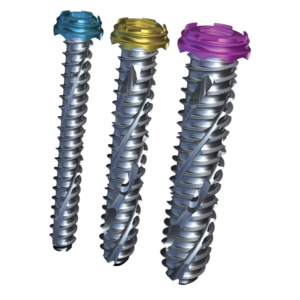

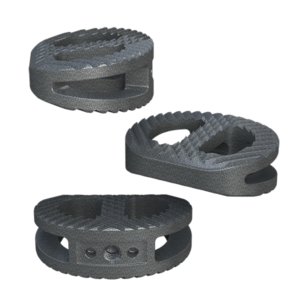 System Features
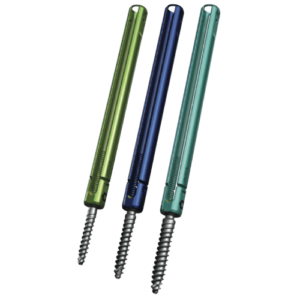 Key Features
 Key Features
 Key Features
 Key Features
 Key Features
 Key Features
 Key Features
 Key Features
 Key Features